Water Quality
How Hard Water Damages Your Pipes and Fixtures
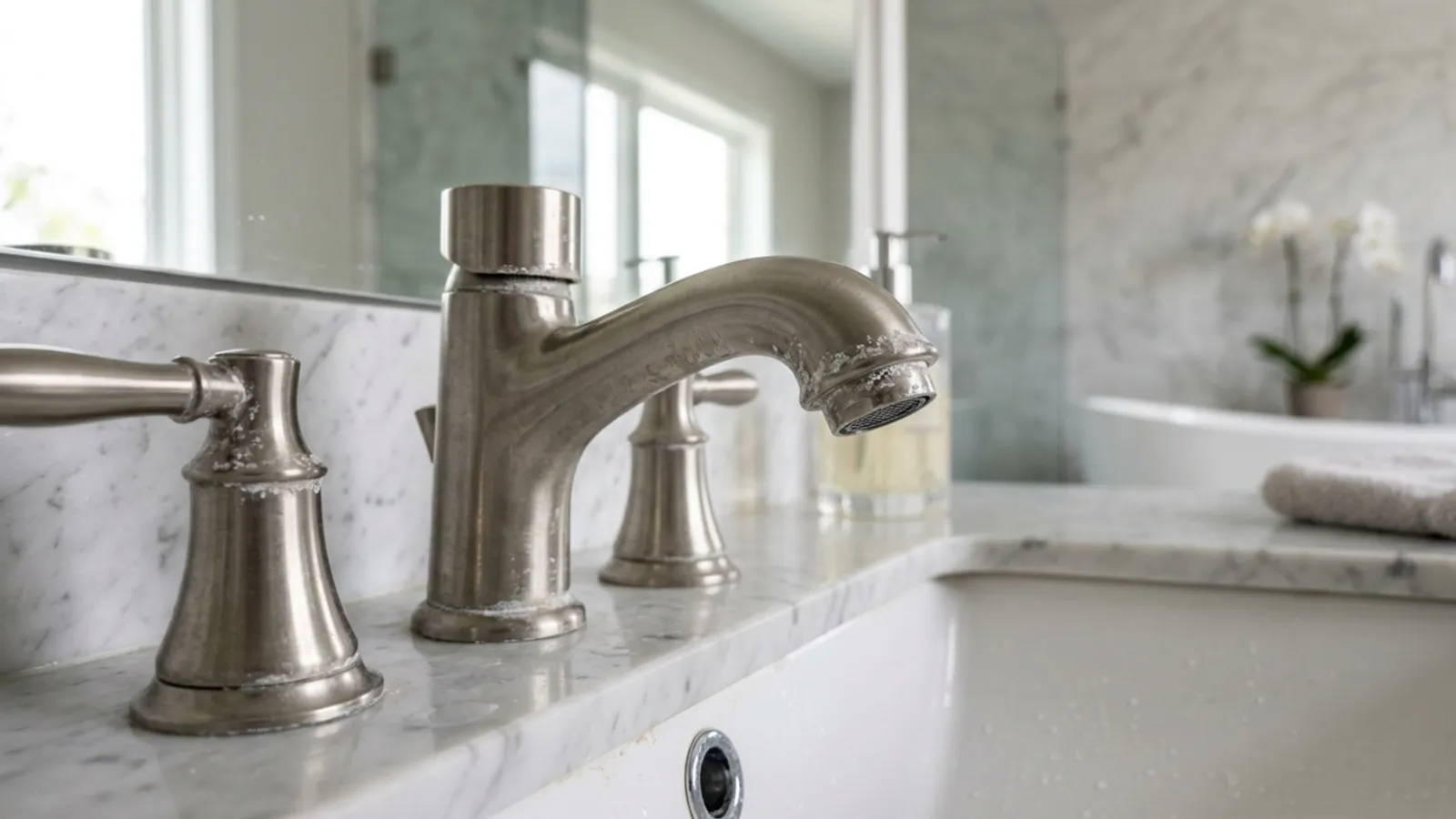
Residents of Riverside County often notice white spots on dishes, stiff laundry, and the need for extra soap to work up a lather. These are classic signs of hard water — water that contains elevated levels of dissolved calcium and magnesium. Hard water is generally safe to drink, but it is harsh on a home’s plumbing infrastructure. Understanding how minerals damage pipes, fixtures, and water-using appliances helps homeowners in Temecula, Murrieta, Menifee, Hemet, and surrounding communities protect their property and avoid premature repairs.
How Scale Forms and Where It Accumulates
The primary issue with hard water is scale formation. As water is heated or allowed to evaporate, dissolved minerals precipitate and attach to surfaces as chalky limescale. Inside pipes, scale builds up slowly, layer by layer. In older homes with galvanized steel or early copper lines, scale can restrict the interior diameter enough to reduce water pressure and force the system to work harder. Even in homes with PEX piping, fittings, valves, and aerators collect scale and limit flow over time.
Scale damage is most visible on fixtures. Faucets, showerheads, and glass shower doors bear the brunt of mineral deposits. Limescale clogs the tiny nozzles in showerheads, causing erratic spray patterns or reduced flow. Toilet fill valves and mixing valves stick or wear out faster when minerals foul their moving parts. Mineral abrasion dulls or etches finishes on higher-end fixtures, making them look corroded despite regular cleaning. Internal components — rubber washers, O-rings, and ceramic cartridges — also degrade sooner in hard-water environments, leading to persistent drips that waste thousands of gallons per year. For more on what a constant drip costs, see our post on repairing vs. replacing a leaky faucet.
Water Heaters Take the Hardest Hit
The water heater is the appliance most directly affected by hard water. As water warms, minerals settle on the tank bottom as sediment. That sediment acts as an insulator between the heating elements and the water, reducing efficiency, extending heating time, and causing the rumbling or popping sounds many homeowners eventually hear. Over time, excessive heat concentration can shorten tank life and increase the risk of leaks from the bottom.
Tankless units are not immune. Scale accumulates inside narrow heat exchangers, restricting flow and triggering error codes that require professional descaling. Tank water heaters benefit from an annual flush to remove sediment — or more frequently in areas with very hard water. Tankless heaters need yearly descaling service. Most water heater replacements require permits in California; Gardner Plumbing Co. (CSLB #1073177) handles all applicable permitting requirements. Financing is available for qualifying projects including water heater replacement and whole-home water treatment systems. For full details on hot-water performance issues, see our guide on why hot water runs out too fast.
Appliances, DIY Checks, and Local Water Data
Dishwashers and washing machines suffer when water is hard. Detergents do not dissolve as effectively, reducing cleaning power and leaving soapy residues on dishes and laundry. Mineral buildup inside appliances can clog valves, reduce pump efficiency, and shorten equipment life. Coffee makers, ice makers, and humidifiers show similar problems, especially in communities where local water hardness readings run above 10 grains per gallon (gpg) — a level that describes much of Riverside County.
Homeowners can check for hard water signs themselves. Remove and rinse faucet aerators to see if they are packed with fine grit or chalky fragments. Inspect showerhead nozzles for clogged spray holes. Inexpensive water hardness test strips estimate gpg levels. Municipal providers including Eastern Municipal Water District, Western Municipal Water District, and Rancho California Water District publish annual water quality reports — a useful benchmark for understanding your local conditions. The EPA’s drinking water resources explain how to read water quality reports and what mineral levels mean for your plumbing.
Treatment Options: What Works and What to Consider
Treating water before it enters the plumbing is the most effective long-term strategy. Options include:
- Salt-based water softener — uses ion exchange to remove calcium and magnesium; highly effective at preventing scale but adds a small amount of sodium to softened water
- Salt-free conditioner (TAC system) — changes mineral structure to reduce adhesion and scale formation; lower maintenance, no added sodium, but may allow some spotting
- Point-of-use reverse osmosis — excellent water quality for drinking and cooking under a single kitchen tap; does not treat water throughout the home
- Whole-house filtration with chlorine removal — improves taste and protects fixtures from chlorine and sediment; may be combined with softening
A licensed plumber can outline these choices, explain the tradeoffs, and offer a recommendation based on measured hardness, household habits, and your plumbing’s current condition. Gardner Plumbing Co. installs all major water treatment systems and offers flat-rate pricing on whole-house water filtration installations throughout Riverside County.
Hard Water and Leak Detection
Hard water can complicate leak detection. Scale hides developing problems — a pinhole leak in a scaled pipe may drip slowly for months before the moisture becomes visible. Gardner Plumbing Co. technicians use non-invasive detection technology including acoustic equipment, thermal imaging, and electronic leak locating to find hidden leaks behind walls or under slabs without unnecessary demolition. Findings are documented with photos and video so homeowners can see exactly what the technician found. For homeowners who want continuous monitoring, the company also installs smart water shutoff systems like Moen Flo, which provide real-time monitoring, automatic shutoff, and potential insurance discounts.
Ready to protect your pipes from hard water? Call (951) 246-4337 — no trip fees, no obligation. Gardner Plumbing Co. serves Temecula, Murrieta, Menifee, Lake Elsinore, Perris, and 20+ additional cities across Riverside County.
Treat the Water, Protect the Investment
Hard water damage is slow, quiet, and cumulative. By the time a homeowner notices corroded fixtures, an underperforming water heater, or a pinhole leak in a galvanized line, scale has often been building for years. Annual maintenance — tank flushes, aerator cleaning, showerhead soaks — slows the damage. But the most effective solution is treating the water at entry so scale never accumulates in the first place. Gardner Plumbing Co. has 30+ years of experience helping Riverside County homeowners make the right call on water quality solutions.