Emergency Prep
How to Shut Off Water in a Plumbing Emergency
A plumbing emergency can escalate from a minor inconvenience to a major disaster in minutes. When a pipe bursts, a washing machine hose ruptures, or a toilet overflows uncontrollably, water spreads into floors, walls, and belongings faster than most homeowners expect. For residents across Riverside County, the ability to stop water flow quickly is the single most critical skill in limiting damage. Knowing how to shut off water — both at individual fixtures and at the main — is fundamental emergency preparedness.
Start with Isolation Valves
The first line of defense in a localized emergency is the isolation valve — also called a stop valve or angle stop — located on the supply line near each fixture. Turning off the right valve stops water to the problem fixture without cutting supply to the rest of the house.
- Toilet: Look for a small oval or lever-style handle on the wall just below and behind the tank. Turn clockwise until it stops.
- Sink: Inside the cabinet beneath the basin, there are typically two valves — one hot, one cold. Turn both clockwise.
- Washing machine: Supply valves are usually in a recessed box on the wall behind the unit, labeled hot and cold. Turn both off.
- Dishwasher: The supply valve is commonly under the kitchen sink on the hot side.
- Refrigerator ice maker: A small inline valve sits behind the unit or under the sink, depending on how the line was routed.
Labeling these valves in advance — a few minutes with a marker and tape — saves critical seconds during a fast-moving emergency. Older homes in Hemet, Perris, and older parts of Murrieta may have multi-turn gate valves instead of quarter-turn ball valves. These require several clockwise turns to close fully and can be stiffer. Apply steady, gentle pressure — never force a stuck valve, as the stem can break.
Gardner Plumbing Co. recommends upgrading brittle or corroded isolation valves during any plumbing service visit. A failed angle-stop during a toilet overflow or supply-line failure can make a manageable situation much worse. Because washing machine supply hoses are a common cause of residential water damage, braided stainless hoses with periodic replacement are strongly recommended over standard rubber hoses.
Using the Main Shutoff Valve
If the emergency involves a burst pipe behind a wall, a major leak that cannot be isolated, or an isolation valve that is stuck or broken, you must use the main water shutoff. This valve controls the entire home’s water supply. For a full walkthrough of how to find it and what type it is, see our dedicated guide on locating and using your main shutoff valve.
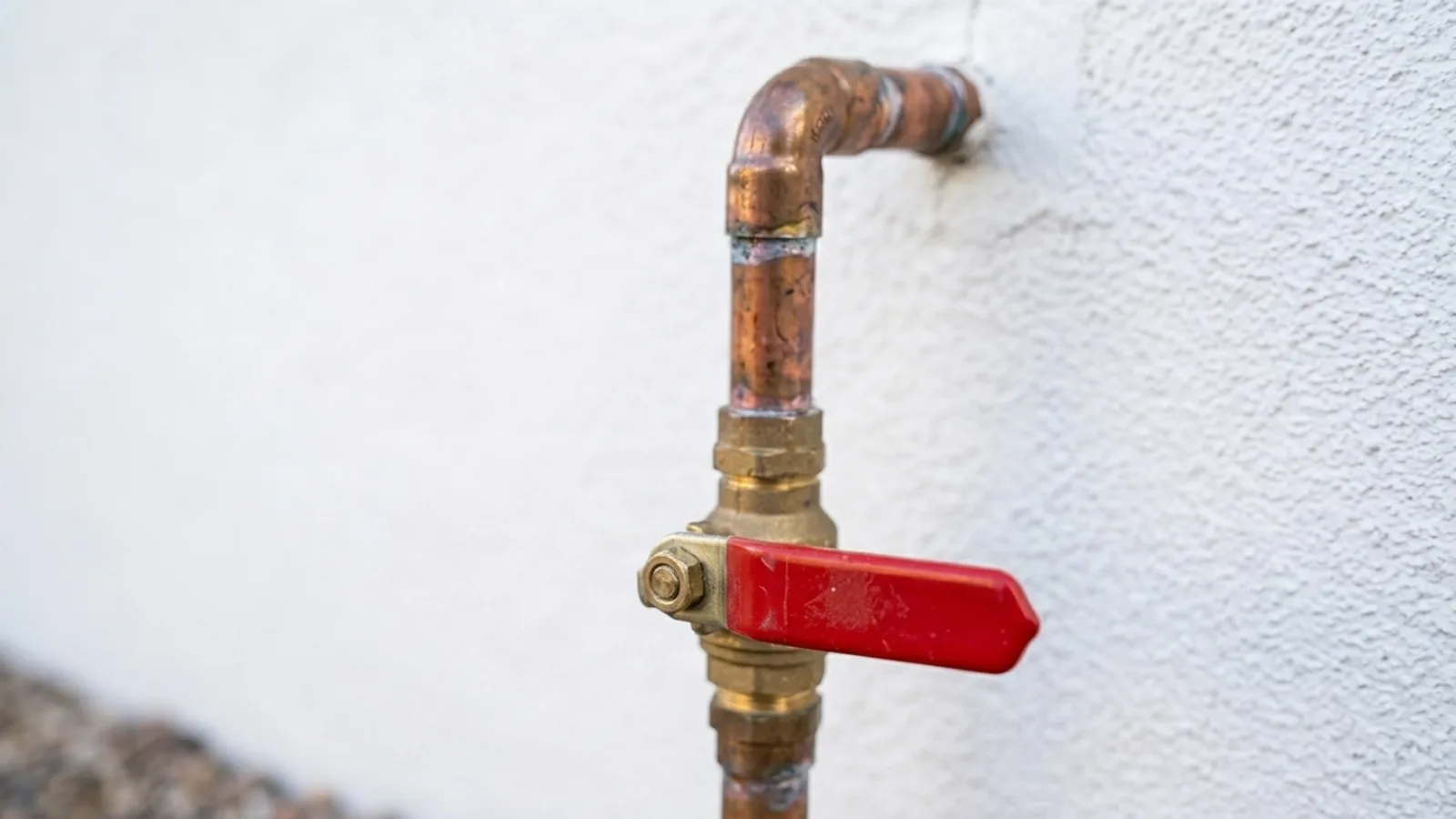
In Southern California, the main shutoff is often outdoors — on an exterior wall near the front of the house or where the main line enters the foundation. In newer Temecula and Murrieta tract homes, it is commonly at chest height on an exterior wall with a lever-style handle. In garages, look near the water heater or softener. Two valve types are common:
- Ball valve: lever handle, quarter-turn (perpendicular to pipe = off). Faster and less prone to sticking.
- Gate valve: round wheel handle, turn clockwise until it stops. May require multiple full turns.
After closing the main, open the lowest faucet in the house to relieve residual pressure and drain water from the lines. If water will be off for more than a few minutes, set a gas water heater to pilot mode or switch off an electric unit at the breaker — heating elements cycling dry can burn out.
If the main shutoff cannot be found or is inoperable, the water can be shut off at the municipal meter near the street. The box is usually set flush with the ground. The valve inside requires a water meter key or a large adjustable wrench. Turn clockwise until the holes on the valve align. Wear gloves — the box can contain dirt and insects.
After the Water Is Off
Once flow is controlled, quick action on cleanup limits secondary damage. Move furniture and rugs off wet areas. Towels, mops, and a wet/dry vacuum remove standing water. Fans and open windows speed drying, but if water soaked into walls or cabinets, professional drying may be needed to manage humidity and prevent mold. Take photos before cleanup begins — the documentation helps with insurance claims if damage is significant.
If the water came from a drain line or toilet backflow, limit contact and consider professional cleanup — sewage-contaminated water is a health hazard. In multi-story homes in Temecula or Murrieta, a ceiling that bulges from trapped water can be relieved by making a small hole with a screwdriver to direct flow into a bucket — but stay clear of any light fixtures or outlets near the wet area, and switch off power to affected circuits if needed.
For burst pipes, major slab leaks, or rapidly spreading water, call for professional help immediately after stopping the flow. Gardner Plumbing Co. technicians use thermal imaging, acoustic equipment, and electronic locating to find hidden damage quickly, documenting findings with photos and video. The Gardner emergency plumbing service is available when the situation cannot wait. According to Ready.gov, knowing how to shut off your water supply is one of the core household preparedness steps — and one that pays for itself the first time a pipe fails.
Smart Monitoring as Backup
For vacation homes, rental properties, or households where family members may not know how to find the main shutoff, smart water monitoring adds an automatic layer of protection. Moen Flo systems installed by Gardner Plumbing Co. monitor flow in real time and can cut off water automatically when an abnormal pattern is detected — providing protection even when no one is home. Some homeowners insurance carriers offer premium discounts for approved smart shutoff systems.
Test the main shutoff valve annually: close it, confirm flow stops at an interior faucet, and reopen. If it sticks or fails to fully stop the flow, have it evaluated before an emergency forces the issue. Mark the valve with a bright label so every adult in the home can find it without a search.
Plumbing emergency or want a shutoff valve inspection? Call (951) 246-4337 — no trip fees, no obligation. Gardner Plumbing Co. (CSLB #1073177) serves Temecula, Murrieta, Menifee, Lake Elsinore, Hemet, and 20+ additional cities across Riverside County.
Preparation Wins Emergencies
Knowing where your isolation valves are, being able to identify and operate the main shutoff, and having a licensed plumber’s number saved in your phone — these three things together dramatically change the outcome of a plumbing emergency. Teach every adult in the household. Walk the house together. The five minutes of preparation now can save tens of thousands of dollars in water damage later.