Seasonal
How to Prevent Frozen Pipes During Unexpected Cold Weather
Riverside County is known for warm, sunny weather — but residents in Temecula, Murrieta, Menifee, Lake Elsinore, Hemet, and surrounding areas know that winter nights can bring unexpected cold snaps. When temperatures dip near or below freezing, homes in Southern California face a risk that colder-climate houses handle automatically: frozen pipes. The reason is simple. Plumbing in this region often runs through uninsulated attics, garages, exterior walls, and crawl spaces that no one bothered to insulate because freezes were rare. A single night of hard freezing can cause significant water damage if pipes are not prepared. This is a companion to our broader winter plumbing prep guide for Riverside County homeowners.
Why Pipes Burst When They Freeze
Water expands when it freezes. In a closed plumbing system, that expansion creates pressure between the ice plug and any closed faucet downstream. The pipe wall or a fitting gives way — often at a threaded joint or elbow several feet from the actual ice. Copper, galvanized steel, and PEX can all fail under this pressure, though PEX's flexibility makes it more forgiving than rigid metal pipe. FEMA's Ready.gov cites frozen pipes as one of the most common and costly winter home emergencies, even in mild climates.
Which Riverside County Areas Face the Highest Freeze Risk
Not all communities in Riverside County carry the same freeze exposure. Elevation and microclimate matter significantly. Homeowners should factor their location when planning winterization:
- Temecula / Murrieta: Valley floor temperatures can drop into the upper 20s on cold nights, especially in January and February. Attic and garage plumbing in homes built before 2000 is routinely uninsulated.
- Hemet / San Jacinto: Higher elevation exposure and fewer urban heat island effects push overnight lows lower than coastal Inland Empire cities. Freeze events here are more frequent than residents expect.
- Lake Elsinore / Wildomar: Funnel geography traps cold air on still nights. Pipes in uninsulated garages and exterior utility rooms are at meaningful risk during cold snaps.
- Menifee / Perris: Generally warmer valley floors, but homes in northern and elevated sections can see sub-35°F nights several times per winter. Still worth insulating exposed attic runs.
- Mountain communities (Idyllwild, Mountain Center): Extended freeze periods are routine. Any supply lines in exterior walls or under-slab penetrations that are not sleeved require special attention.
Insulate Before the Freeze Arrives
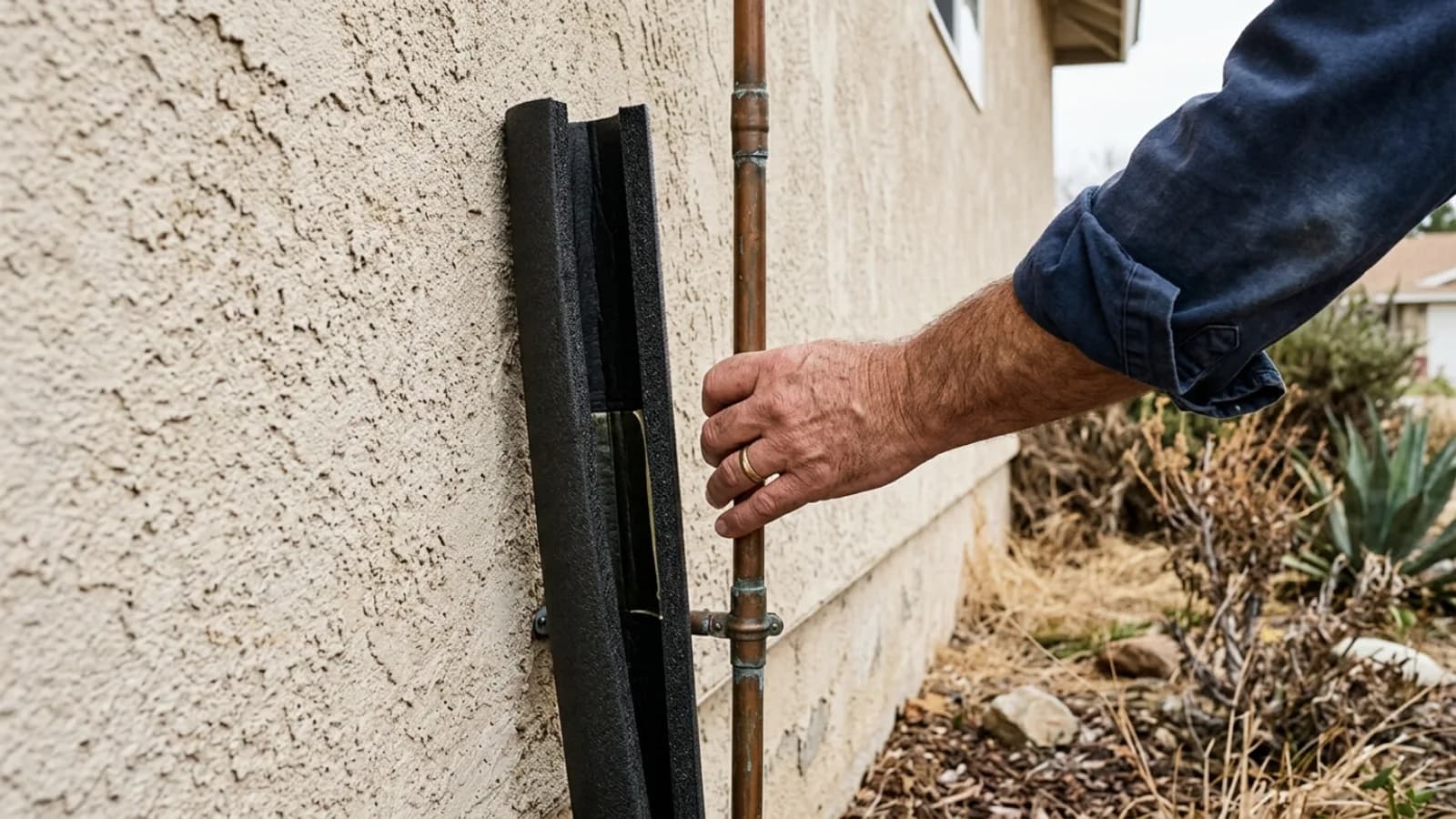
Foam pipe insulation is the most effective preventative measure. Any water supply line in an unheated space — garage, attic, crawl space, or exterior wall cavity — should be wrapped. Insulation is inexpensive, easy to cut to length, and installs without tools. Choose the right inner diameter for a snug fit, seal seams with tape, and cover elbows and tees with preformed pieces. For outdoor hose bibs, disconnect all garden hoses before cold weather arrives — a hose left attached traps water inside the spigot and turns a minor frost into a cracked fitting. Install insulated faucet covers for added protection. If your home has older hose bibs, upgrading to frost-free sillcocks reduces future risk considerably.
Immediate Steps When a Freeze Warning Is Issued
Open cabinet doors under kitchen and bathroom sinks so warm interior air can circulate around supply lines on exterior walls. Keep interior doors open to balance heat throughout the house. If the laundry area is in the garage, keep the garage door closed. Allow a thin, steady drip from faucets connected to exposed pipes — moving water is much harder to freeze, and an open faucet provides pressure relief if freezing begins. Know where your main water shutoff is and test it annually so it turns freely. Our guide on locating and using your main shutoff valve covers the process step by step.
If a Pipe Freezes or Bursts
Leave the affected faucet open. Look for frost on the pipe, unusual bulges, or a cold spot on a wall or ceiling. A hair dryer or towels soaked in hot water can gently thaw an accessible section — work from the faucet back toward the source. Never use an open flame. If a pipe has already burst, shut off the main water supply immediately, open faucets to relieve residual pressure, and turn off the water heater. Then call for emergency service — every minute of running water after a burst increases damage. Gardner Plumbing Co. uses thermal imaging and acoustic equipment to locate concealed freezes or leaks without destructive demolition. For homes that want ongoing protection, Moen Flo smart water monitoring provides automatic shutoff and real-time alerts if abnormal flow is detected. For larger repairs — pipe replacement, rerouting lines away from exterior walls, or heat cable installation — financing is available for qualifying projects. CSLB #1073177.
Frozen or burst pipe? Call (951) 246-4337 immediately — no trip fees. Gardner Plumbing Co. serves Temecula, Murrieta, Menifee, Lake Elsinore, Hemet, Corona, and 19+ additional communities across Riverside County.
Preparation Costs Pennies Compared to Repairs
A roll of foam insulation and a set of faucet covers costs under $30 and takes an afternoon to install. A burst pipe — with water damage, drywall repair, and flooring replacement — routinely runs into four or five figures. The math strongly favors preparation. Gardner Plumbing Co. offers winterization services including pipe insulation, frost-free hose bib upgrades, heat cable installation, and full-system inspections across Riverside County and neighboring communities.