Water Heaters
Tank Water Heater Maintenance: How to Extend Its Life
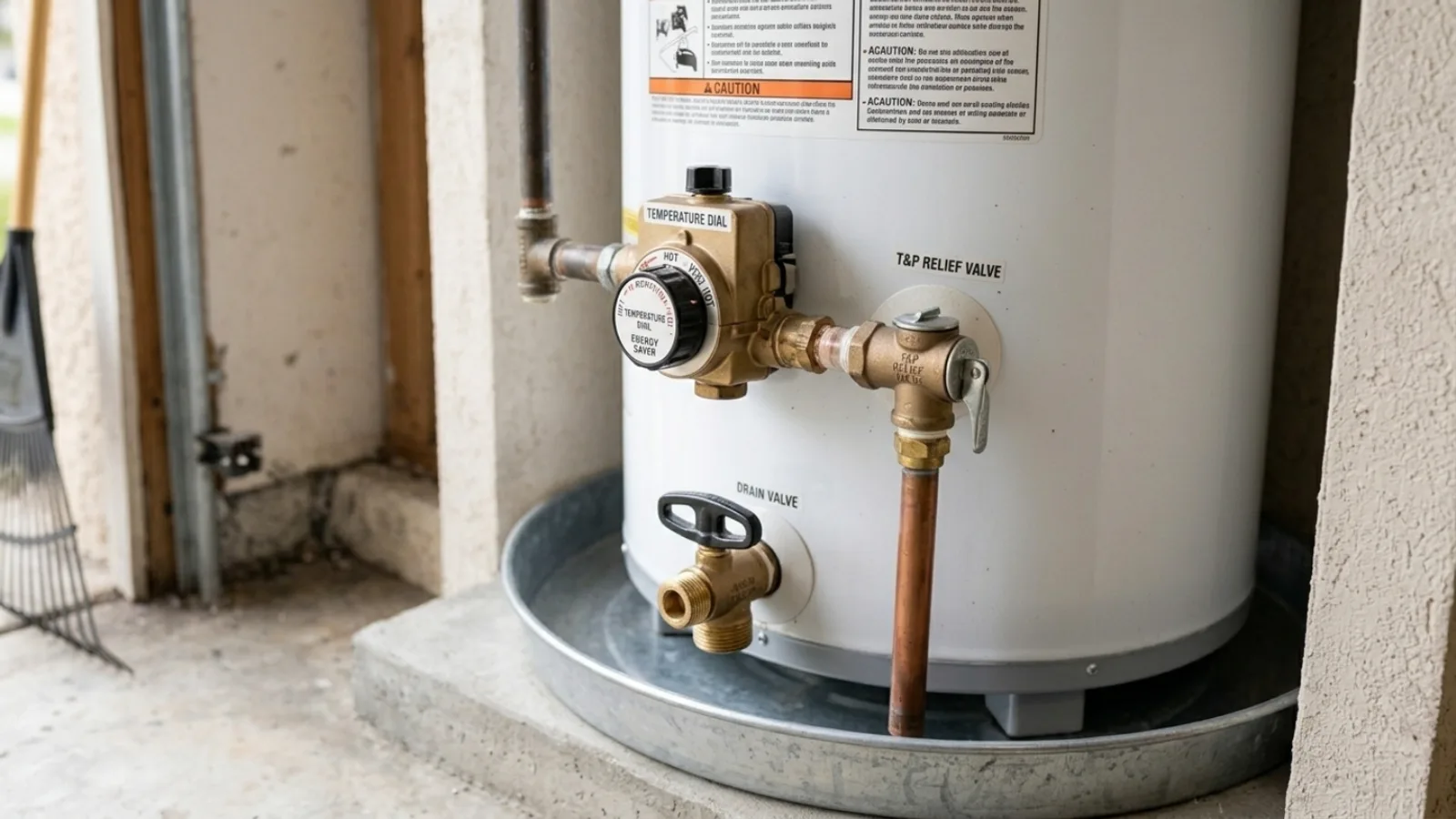
A tank water heater is a workhorse that operates around the clock to supply hot water for bathing, cooking, and cleaning. Like any major appliance, it requires periodic maintenance to run efficiently and reach its expected lifespan of 10 to 15 years. For homeowners in Riverside County, where hard water is the norm, sediment and mineral buildup accumulate faster than in softer-water regions — making proactive maintenance even more important. The steps below are manageable for most homeowners, and a professional visit catches the items that require a trained eye.
Annual Tank Flush
Flushing the tank once a year — or more frequently in communities with very hard water — removes the sediment that settles at the bottom as minerals precipitate from the hot water supply. Sediment acts as an insulator between the burner or heating element and the water, forcing the unit to run longer, use more energy, and produce the rumbling or popping sounds that many Riverside County homeowners notice in aging heaters.
A safe DIY flush follows these steps:
- Turn off power at the breaker for electric units, or set the gas control to "pilot" for gas models.
- Close the cold-water supply valve at the top of the heater.
- Open a nearby hot-water faucet to allow air into the system and speed draining.
- Attach a garden hose to the drain valve at the base of the tank and route the hose to a floor drain or outside.
- Open the drain valve and let the tank drain until the water runs clear.
- Close the drain valve, remove the hose, reopen the cold-water supply, let the tank fill, then restore power or relight the burner.
- Check for any drips at the drain valve. If it will not close fully or drips after flushing, replace the valve.
If the drain valve is clogged — common in tanks that have not been flushed in many years — do not force it. A professional should handle the flush to avoid breaking a brittle valve and releasing sediment-laden water inside the home.
Checking the T&P Relief Valve
The temperature and pressure relief (T&P) valve is a safety device that prevents catastrophic tank failure from excess pressure or temperature. It should be tested annually. Place a bucket under the discharge pipe, then gently lift the lever for a second or two. You should get a strong flow of water that stops when you release the lever. If the valve drips after testing, shows heavy corrosion, or will not open and close cleanly, it likely needs replacement — a job for a licensed plumber, as a failed T&P valve is a genuine safety concern. The discharge pipe must always remain unobstructed and piped to a safe location so hot water and steam can exit freely. Never cap or restrict it.
Inspecting and Replacing the Anode Rod
The anode rod — typically magnesium or aluminum — is a sacrificial component inside the tank that attracts corrosive elements in the water and degrades over time rather than allowing the steel tank to rust. In Riverside County’s hard water, checking the rod every one to two years is worthwhile. If it is worn down to a thin wire or coated with heavy calcium deposits, replace it to extend tank life.
Magnesium rods protect well and can reduce odors, but may dissolve faster in certain water conditions. Aluminum and aluminum/zinc rods typically last longer. For persistent "rotten egg" smells from hot water — caused when sulfate in the water reacts with the magnesium anode — a powered anode can eliminate the odor without affecting protection. Homes with water softeners may see faster anode consumption and should check annually.
For homes where hard water is a persistent problem, a whole-house water softener or scale-reduction system addresses the root cause, reducing mineral load on the heater, pipes, and fixtures throughout the home. The U.S. Department of Energy notes that sediment buildup is one of the primary causes of reduced water heater efficiency and early failure.
Temperature Setting and Seismic Strapping
The recommended temperature setting for most residential water heaters is 120°F. This provides comfortable hot water for daily use while reducing energy consumption and minimizing scald risk. Homes with a hot-water recirculation pump can add a timer or smart control to limit heat cycling when hot water is not needed.
California seismic code requires water heaters to be strapped to wall studs to prevent tipping during an earthquake. Check that straps are present, properly anchored, and tight. In communities like Corona and Riverside, where earthquake preparedness is part of life, this simple check can prevent a fallen water heater from becoming a gas leak or flood during a seismic event. Gardner Plumbing Co. handles permit requirements for water heater replacements in California, including installation of seismic straps and drain pans where required.
Gas-Specific and Electric-Specific Checks
For gas units, inspect the venting system annually. The vent pipe should be properly connected, free of obstructions, and pitched correctly to carry exhaust gases outside. A steady, mostly blue flame at the burner is the goal; yellow tips, soot, or a weak flame can indicate a dirty burner, poor venting, or drafting problems. Many newer gas heaters include a flame arrestor or air intake screen at the base — gently cleaning it with a soft brush and vacuum restores proper airflow. If there is any concern about carbon monoxide, install CO detectors and schedule a professional inspection.
For electric heaters, sediment control directly protects the heating elements. Heavy scale causes the popping sounds many homeowners notice and can cause premature element burnout. If hot water runs out faster than it used to, or recovery seems slower, a technician can test both elements and thermostats and replace components as needed. Insulating the first few feet of hot and cold pipes at the heater reduces standby heat loss and can eliminate condensation in humid utility closets.
When to Call a Professional
Some maintenance tasks clearly belong to a licensed plumber: replacing a T&P valve, servicing a gas burner, testing and replacing heating elements, or addressing a tank that leaks at the base. Signs that warrant an immediate call include heavy sediment return within weeks of a flush, active leaking around the base or connections, rust-colored water, or a unit past its expected lifespan that is showing multiple symptoms. If slow recovery time or repeated cold-water complaints are the main symptoms, our no hot water service covers fast diagnostic and repair options. Gardner Plumbing Co. offers same-day water heater service in many cases, presents repair and replacement options with clear pros and cons, and handles permits and code compliance for all work in California. Many homeowners choose financing for larger improvements. The company is licensed under CSLB #1073177 and has served Riverside County homeowners for 30+ years.
Ready for a water heater maintenance visit? Call (951) 246-4337 — no trip fees, no obligation. Gardner Plumbing Co. serves Temecula, Murrieta, Menifee, Lake Elsinore, Hemet, and 20+ additional cities across Riverside County.
A Few Hours a Year, Several More Years of Service
A tank water heater that receives annual flushing, an inspected anode rod, a tested T&P valve, and a clean burner or descaled elements routinely outlives the manufacturer’s warranty period by several years. In Riverside County’s hard-water environment, skipping these steps means paying for an early replacement instead. Gardner Plumbing Co. technicians document every maintenance visit with photos and video so homeowners can see exactly what was found and what was done.