Sewer & Septic
Tree Root Intrusion: How Roots Damage Plumbing and What to Do
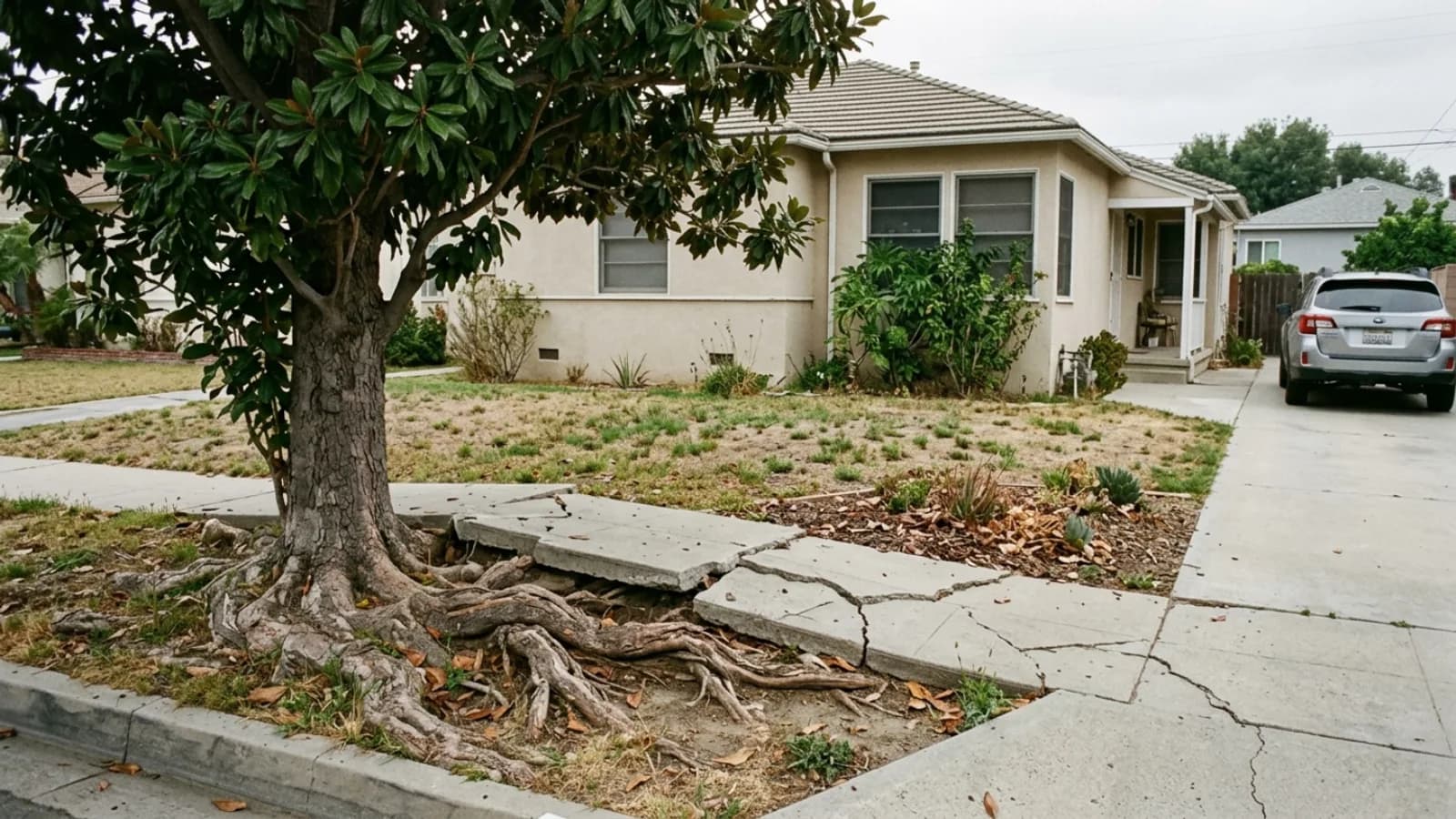
Mature trees are a prized feature of any Riverside County property. In cities like Temecula, Murrieta, Menifee, Lake Elsinore, and surrounding communities, species like ficus, eucalyptus, jacaranda, and cottonwood grow aggressively — and their root systems go looking for moisture. When a sewer lateral or supply line has a hairline crack, loose joint, or aging connection, those roots find it. What starts as a thin fiber mat inside the pipe eventually grows into a blockage that stops wastewater flow entirely.
How Root Intrusion Happens
Roots are drawn to the moisture and nutrients that escape from even minor pipe defects. A feeder root slips through a gap at a joint or a small crack in the pipe wall. As that root thickens, it widens the opening and forms a dense mat that traps toilet paper, wipes, and grease. Over time the mat restricts flow and eventually causes backups. Pipe material affects vulnerability: older clay tile has many joints that can separate as soil shifts. Cast iron corrodes and pits over decades. Even modern PVC or ABS can develop gaps if soil settles or a heavy load creates stress on the lateral. Understanding what is in your sewer line is one reason a professional sewer inspection matters.
Signs of Root Intrusion
Root intrusion produces the same symptoms as other sewer blockages: slow drains across multiple fixtures, gurgling toilets, recurring clogs, and sewage odors indoors or in the yard. Outdoors, unusually lush or green grass over the sewer lateral — especially in otherwise dry periods — is a common visual clue. Wet spots or soft ground after dry weather can indicate leaking wastewater below. These symptoms overlap with general sewer line warning signs, but when large trees are present near the lateral, root intrusion should move to the top of the suspect list. The American Water Works Association recognizes root intrusion as one of the leading causes of infrastructure degradation in underground piping systems.
Correct Diagnosis: Camera First
A sewer inspection camera fed through the cleanout or roof vent shows roots, cracks, sags, and pipe condition inside the line. A locating device on the camera head maps the path and depth so technicians know exactly where to work. Gardner Plumbing Co. documents every inspection with photos and video so homeowners see what the technician sees — an important step before choosing any repair option.
Treatment Options
Treatment depends on what the camera finds. Mechanical cutting with a drain machine trims roots and restores flow quickly but may leave fine root fibers that regrow. Hydro-jetting uses high-pressure water to scour the full pipe diameter, cutting roots and flushing debris — a more complete clean that also preps the line for any structural repair that follows. If roots have caused cracks or collapse, structural options include trenchless pipe lining (CIPP), which forms a new pipe inside the old one with minimal digging, or pipe bursting, which pulls a new pipe through while breaking the old one outward. Spot repair handles a short damaged section without full replacement. Gardner Plumbing Co. presents each option with pros and cons and upfront flat-rate pricing so homeowners choose with clear expectations. For larger sewer projects, financing is available for qualifying work.
Tree Species Most Likely to Cause Problems in Riverside County
Not all trees carry equal risk for sewer lines. In Riverside County communities, these species are the most consistent offenders based on root system aggressiveness and prevalence in local landscaping:
- Ficus (Ficus benjamina, F. nitida): Extremely aggressive surface and lateral roots. Common in older Temecula and Riverside neighborhoods as street trees and privacy hedges. High risk within 30 feet of a lateral.
- Eucalyptus: Fast-growing with wide-spreading lateral root systems. Common throughout Riverside County. Root spread often exceeds canopy spread.
- Jacaranda: Popular ornamental tree. Less aggressive than ficus but roots seek moisture readily — moderate risk near older clay laterals.
- Pepper tree (Schinus molle): Widespread in older residential areas of Hemet, San Jacinto, and Perris. Roots are highly invasive in sewer joints.
- Cottonwood and willow: Very high water affinity. Any planting near a lateral is problematic — roots can reach a lateral from 50+ feet away.
- Sycamore and ash: Large root systems; moderate-to-high risk near aging laterals.
If your yard contains any of these species within 25–40 feet of the sewer lateral, a proactive camera inspection is a lower-cost choice compared to an emergency call after a full backup.
Prevention Going Forward
Know the sewer lateral path from the house to the street. Plant new trees and large shrubs well away from the line, and avoid aggressive species near it. Install root barriers where appropriate, keep irrigation from overwatering near the lateral, and schedule periodic inspections for older lines or tree-heavy properties. Flush only toilet paper — fats, wipes, and dental floss snag on fine roots and accelerate buildup. If a sewer backup or overflow occurs, call immediately. Sewage is a health hazard, and delay increases damage. Gardner Plumbing Co. serves Temecula, Murrieta, Menifee, Lake Elsinore, Hemet, Corona, and across Riverside County. CSLB #1073177.
Suspect root intrusion? Call (951) 246-4337 — no trip fees, no obligation. Gardner Plumbing Co. offers sewer camera inspections, hydro-jetting, and trenchless repair options throughout Riverside County.