Plumbing Basics
Understanding Your Home’s Plumbing System
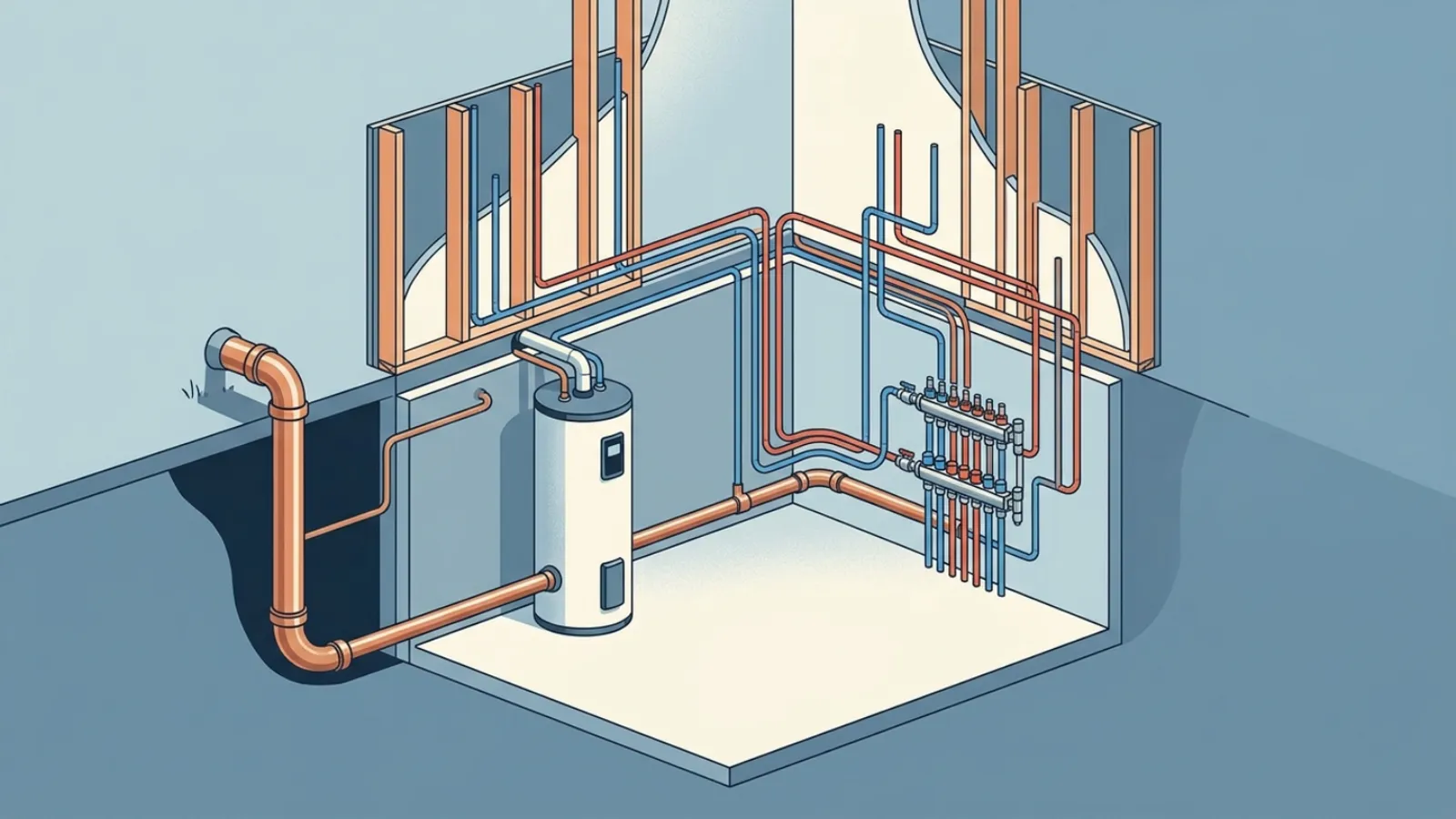
The plumbing system is one of the most vital parts of any home, yet it remains largely invisible to most homeowners. Because the majority of pipes are hidden behind walls, under floors, and buried in the yard, it is easy to take the system for granted — until something goes wrong. For residents across Riverside County, a basic understanding of how home plumbing works empowers you to perform routine maintenance, communicate clearly with professionals, and respond quickly in an emergency.
Two Systems Working Together
Every residential plumbing system consists of two separate subsystems: the water supply system and the drain-waste-vent (DWV) system. These two networks operate on different principles and never intersect, ensuring clean water and wastewater remain completely separate.
The water supply system brings fresh water into the home from the municipal main — or a private well. It relies on pressure to move water upward and around corners to reach every fixture. The main supply line enters through a water meter that tracks usage. Just after the meter sits the main water shutoff valve. Knowing where this valve is located is one of the most important pieces of plumbing knowledge a homeowner can have — shutting it off is the first step in stopping any major leak. See our guide on how to locate and use your main shutoff valve for step-by-step instructions.
Pressure, Water Heaters, and Supply Lines
Many homes in Temecula, Murrieta, and Menifee have a pressure reducing valve (PRV) near the meter or main shutoff. City water pressure can exceed what a home’s pipes and fixtures are designed to handle. The PRV lowers it to a safer range — typically 50–80 PSI. A simple pressure gauge on a hose bib can show the home’s actual reading. Pressure that is too high causes banging pipes, frequent toilet fill-valve failures, and leaking supply lines.
Once inside the home, the cold water line branches off to supply fixtures directly. A dedicated line also runs to the water heater. In homes with a PRV or backflow device, a small expansion tank near the water heater absorbs pressure changes when water expands during heating, protecting pipes and fixtures from stress. At every sink, toilet, and appliance, small isolation valves on the supply lines allow individual shutoff for repairs without disrupting the rest of the house. Turn these valves gently once or twice a year to keep them from seizing.
Pipe materials vary by age and neighborhood. Newer homes around Lake Elsinore and Wildomar typically use PEX or copper supply lines, while older properties may still have galvanized steel, which corrodes internally and reduces flow over time. Understanding what materials are present helps determine the right repair method. Homes with aging galvanized lines may benefit from reviewing repiping options.
The Drain-Waste-Vent System
The drain-waste-vent (DWV) system is responsible for safely removing wastewater and sewer gases from the home. Unlike the pressurized supply system, drainage relies entirely on gravity. All drain pipes are installed with a slight downward pitch so wastewater flows naturally toward the main sewer line and out to the municipal sewer or septic tank.
A critical component is the P-trap — the curved section of pipe visible under every sink. The P-trap holds a small amount of water that creates a seal preventing foul-smelling, potentially harmful sewer gases from backing up into living spaces. Every plumbing fixture, including toilets and showers, has a trap. In unused bathrooms or floor drains, trap water can evaporate over time; simply pour a cup of water into the drain to restore the protective seal.
The vent portion of the DWV system extends upward from drain lines and exits through the roof, allowing sewer gases to escape safely and introducing air into the drainage network. Without proper venting, draining water creates a vacuum that slows flow and can siphon water out of P-traps. Signs of a vent issue include gurgling sounds, slow drainage across multiple fixtures simultaneously, or a sewer odor that fades after running water. If these symptoms appear, professional drain service with a camera inspection can confirm whether the problem is a blockage or a vent issue.
Hard Water and Water Heater Considerations
Water heaters in Riverside County are subject to accelerated sediment buildup from the region’s hard water. Flushing the tank annually — or more frequently in areas with very hard water — extends service life and restores hot water capacity. The temperature and pressure relief (T&P) valve on any water heater is a key safety device; it should always be unobstructed and piped to a safe discharge location. Most water heater replacements require permits in California; a licensed contractor (CSLB #1073177) can determine the applicable requirements and handle permitting.
Backflow protection is also part of a safe supply system. Hose bibs should have vacuum breakers, dishwashers typically use an air gap, and irrigation systems need backflow assemblies. These devices prevent non-potable water from being drawn back into the drinking water supply during pressure drops. Learn more about backflow prevention services from Gardner Plumbing Co.
Responding to Plumbing Emergencies
During a plumbing emergency — a burst pipe, leaking water heater, or main line failure — the first step is always to turn off the main water valve, then call for professional help immediately. Every minute of running water increases the risk of damage. Opening a sink faucet at a low point in the home helps relieve residual pressure after the main is closed.
Gardner Plumbing Co. serves homeowners throughout Temecula, Murrieta, Lake Elsinore, Menifee, Wildomar, Hemet, Perris, Riverside, Corona, and neighboring communities. The company uses sewer cameras, thermal imaging, electronic leak locating, and acoustic equipment to diagnose problems accurately and document findings with photos and video. Flat-rate pricing applies to all services, and financing is available for qualifying projects such as repiping, water heater replacement, or whole-home filtration. The full 65-point plumbing inspection is a smart starting point for homeowners who want a complete picture of their system’s condition.
Questions about your home’s plumbing? Call (951) 246-4337 — no trip fees, no obligation. Gardner Plumbing Co. serves Murrieta, Temecula, Menifee, Riverside, Corona, and 20+ additional cities across Riverside County.
Knowledge Prevents Emergencies
A slow drain points to a blockage in the gravity-fed waste system. A sudden loss of water pressure suggests a supply-side issue. Discolored hot water may mean sediment in the water heater. An unexplained spike in the water bill can signal a hidden leak. Understanding these basic principles lets you identify the right solution faster — and helps you communicate clearly with the professional who fixes it.