Sewer & Septic
Understanding Your Home's Main Sewer Cleanout
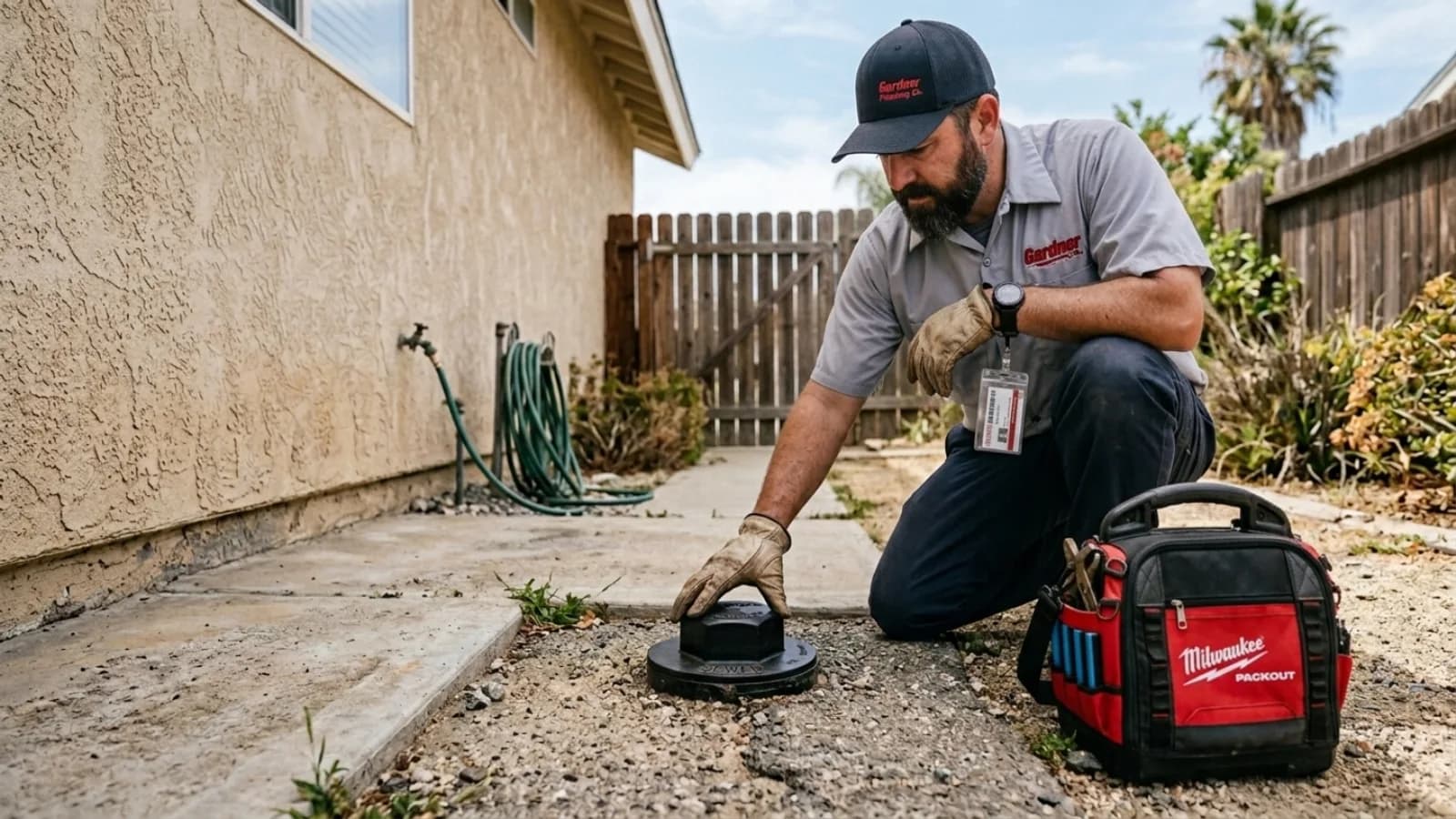
Every home has a main sewer cleanout — an access point to the primary sewer lateral that connects the house plumbing to the city sewer main or a septic tank. Most homeowners in Riverside County have never found theirs. That is not usually a problem until it becomes one: during a sewer backup, the cleanout is the single most important access point in the entire plumbing system, and a plumber who cannot locate it quickly is forced to work through an interior drain or remove a toilet — slower, messier, and more disruptive approaches that make an already unpleasant situation worse. Knowing where the cleanout is, keeping it accessible, and understanding what it does gives homeowners a meaningful advantage when a plumbing emergency develops.
What a Sewer Cleanout Is and What It Looks Like
The main sewer cleanout is typically a capped pipe made of white or black PVC in modern homes, or cast iron or brass in older construction. The cap usually has a square raised nut designed to be gripped with a pipe wrench. Many newer Southern California homes have a two-way cleanout — a Y-fitting with two directional openings at the surface, one pointing back toward the house and one pointing toward the street or septic tank. This two-way design allows a plumber to access the line in either direction without needing to enter the home. Common sizes are 3 to 6 inches in diameter, and the cleanout may sit at grade level, slightly below grade inside a small plastic utility box, or flush with a concrete or paver surface.
Where to Find It on Your Property
In most Southern California homes built on concrete slabs — the dominant foundation type across Temecula, Murrieta, Menifee, and the surrounding communities — the cleanout is located outdoors, typically near the foundation on the front or side of the house where the sewer lateral exits the building. It may be in a garden bed, along the side yard, or near the front porch. Older homes may have the cleanout inside the garage or in a crawl space. Some properties also have a second "property line cleanout" closer to the sidewalk or curb, inside a round utility box labeled "Sewer" or "CO." If a home has no visible exterior cleanout — a relatively common situation in older Riverside County properties — the cleanout may be inside the house through a floor access panel, or it may not exist at all, in which case a plumber can install one.
What Happens When a Main Line Blocks
When the main sewer lateral partially or fully blocks, wastewater has nowhere to go except back toward the house. The first sign is typically multiple fixtures draining slowly at the same time — a kitchen sink, a bathtub, and a toilet all running sluggish simultaneously points to a blockage below the branch connections, which means the main line. As pressure builds, water may begin backing up into the lowest drain in the home — a ground-floor bathtub, a laundry standpipe, or a floor drain. If the blockage is downstream of the cleanout, the cleanout cap may allow wastewater to surface in the yard, which is unpleasant but actually preferable to a full interior backup: the system is finding a way to relieve pressure outside rather than inside the home.
Common causes of main line blockages in Riverside County include tree root intrusion — particularly from mature eucalyptus, ficus, and pepper trees — grease accumulation, and deterioration of older clay or cast iron pipe joints that allow offset sections to collect debris. A sewer camera inspection shows exactly what is present and guides the appropriate clearing method: cable snaking for simple blockages, hydro-jetting for root mass and heavy grease buildup, or trenchless repair for cracked or offset sections. For more on how the sewer line connects to the broader plumbing system, our guide on sewer and septic services covers the full service range.
Keeping the Cleanout Accessible
Homeowners routinely make cleanout access more difficult without realizing it: burying the cap under mulch or soil, planting shrubs directly over it, building a deck or patio that covers the location, or pouring concrete that encases the cap entirely. When a backup occurs — typically at a moment of maximum household stress — a plumber who cannot find or access the cleanout in the first few minutes of a job must spend that time searching or working through a less efficient access point. Good practice is straightforward: mark the cleanout location on a home sketch or take a photo of the spot, keep 12–18 inches of clear space around the cap, and consider installing a grade-level utility box over the opening to protect it from mowing and foot traffic while keeping it immediately identifiable. If a deck or patio does cover the area, an accessible hatch prevents having to remove structural elements during an emergency.
How to Respond During a Backup
When a sewer backup is in progress, stop using all water in the home immediately — running the dishwasher, washing machine, or any faucet adds volume to a system that already has nowhere to drain it. Keep children and pets away from affected floor drains or outdoor areas with wastewater surfacing. If the exterior cleanout cap can be accessed safely, loosen it slowly with a pipe wrench and stand clear — built-up pressure can send wastewater surging when the cap first breaks free. Do not use chemical drain cleaners during a backup; they are ineffective against main line blockages, can damage pipe materials, and create chemical hazards for the technician who arrives to work on the line. Call a licensed plumber immediately — every additional minute of water use increases contamination and cleanup scope. For the responding technician, a located, accessible cleanout is the most helpful thing a homeowner can provide. Gardner Plumbing Co. brings sewer cameras, hydro-jetting equipment, and trenchless repair capability to every sewer call across Riverside County. Services connect to the broader drain and sewer backup service the team provides. The EPA's guidance on sewer and septic system care also recommends regular professional inspection of laterals as a preventive maintenance practice.
Installing or Upgrading a Cleanout
If a home does not have an accessible exterior cleanout — or has one that is damaged, buried under pavement, or too small for modern camera equipment — a licensed plumber can install or upgrade one. The process typically involves excavating to the main lateral, cutting in a proper Y-fitting or two-way cleanout, and restoring the surface. Most jurisdictions in Riverside County require a permit for cleanout installation; a licensed contractor handles the permit and the inspection. Gardner Plumbing Co. provides flat-rate pricing for cleanout installation and documents all work with photos. CSLB #1073177.
Sewer backup or slow drains across multiple fixtures? Call (951) 246-4337 immediately — no trip fees. Gardner Plumbing Co. serves Temecula, Murrieta, Menifee, Lake Elsinore, Hemet, and 20+ cities across Riverside County.