Kitchen Plumbing
Garbage Disposal Care: Dos, Don’ts, and Maintenance Tips
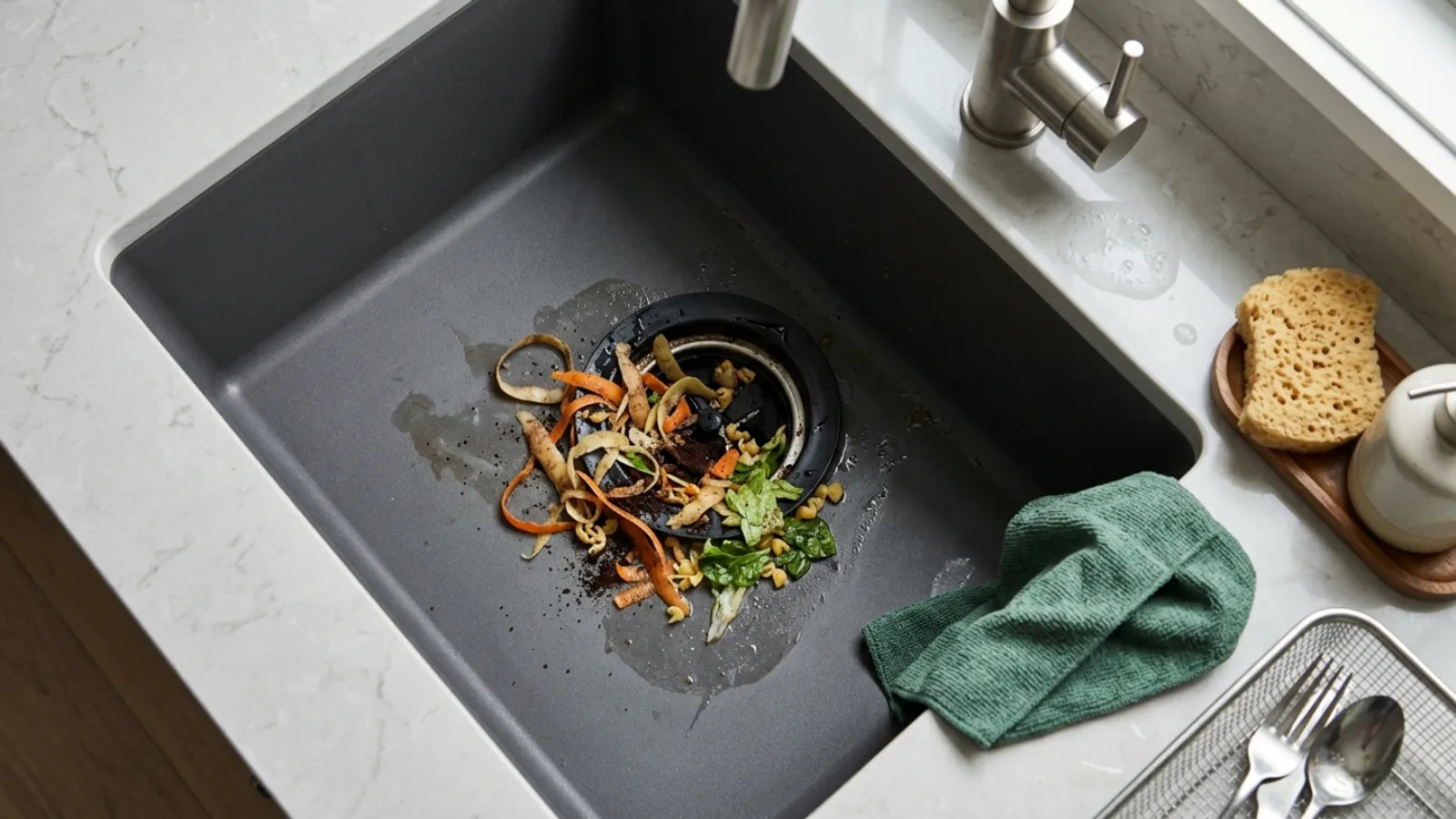
A garbage disposal is a convenient appliance that makes kitchen cleanup faster and reduces food waste in the trash. When used correctly, it keeps the kitchen smelling fresher and reduces the volume of organic material going to landfill. Improper use is one of the most common causes of kitchen plumbing problems in Riverside County homes. Understanding what the disposal is actually designed to handle — and what damages it — prevents jams, drain clogs, and premature motor failure.
How a Disposal Actually Works
Most garbage disposals do not have knife-like blades. They use spinning impellers to fling food waste against a stationary grind ring, breaking it into small particles that flush through the drain. This means the disposal handles soft, biodegradable food scraps well — but is not a general-purpose grinder for hard or fibrous material. The running-water rule is non-negotiable: run a strong stream of cold water before turning the unit on, feed food gradually, and keep the water running for 10–15 seconds after the grinding sound fades. Cold water helps solidify any fats or oils in the material so the impellers can process them rather than letting them coat the drain line as liquid grease.
What Is Safe to Process
The disposal handles soft, biodegradable scraps in small amounts:
- Fruit and vegetable trimmings (excluding fibrous or starchy items — see below)
- Small amounts of cooked meat and soft leftovers
- Small citrus rinds and herb stems in moderation
- Soft bread pieces in small quantities
Small citrus rinds are often suggested for odor control — and they do leave a pleasant scent — but they are not a cleaning method and should not go in regularly in large quantities.
What Causes Problems
Several categories of items damage the disposal or block the drain downstream:
- Fibrous foods — celery, corn husks, artichokes, asparagus, onion skins. These tangle around the impellers and can jam the motor.
- Starchy foods — pasta, rice, oatmeal, potato peels. These swell with water and form a paste that blocks the drain trap.
- Hard items — bones, fruit pits, avocado seeds, nut shells, unpopped popcorn kernels. These dull the grind ring or damage internal components.
- Grease, oil, and fat — the most damaging of all for the drain system. Even if cold water solidifies some of it, fats accumulate on pipe walls and build up over time. Let grease cool in a container, solidify, and throw it in the trash.
- Coffee grounds and eggshells — often debated. Coffee grounds settle like sand in the trap; eggshell membranes can be stringy. Compost or trash is the better destination.
- Non-food items — glass, plastic, metal, twist ties, paper. These will damage the grind ring immediately.
Riverside County cities participate in California’s organics recycling programs. Many homes have green bins. Fibrous peels, corn cobs, and large amounts of food scraps can be diverted there or to a backyard compost pile, reducing the load on the disposal and kitchen drain entirely. Avoiding chemical drain cleaners in the disposal is important — they degrade internal seals and the rubber splash guard. See our post on why chemical drain cleaners damage pipes for more detail.
Cleaning the Disposal
Regular cleaning keeps the disposal smelling fresh and operating efficiently. Grinding ice cubes dislodges food particles from the grind chamber; adding a handful of rock salt provides extra scouring. For odors, grinding citrus peels leaves a pleasant scent. For deeper cleaning, pour a half-cup of baking soda followed by a cup of white vinegar, let it fizz for a few minutes, then flush with cold water. The rubber splash guard traps debris underneath — scrub it regularly with a dish brush and soapy water, or remove and soak it if possible.
Riverside County’s hard water leaves mineral scale inside the disposal and nearby piping. A monthly rinse with warm water and white vinegar loosens scale on the grind ring and chamber. Where water quality is a persistent concern, a whole-house filtration or water-softening system reduces scale buildup throughout the plumbing system, protecting the disposal and all downstream pipes. The EPA’s WaterSense program also notes that responsible kitchen water use — including proper disposal habits — contributes to household water conservation goals.
Clearing a Jam Safely
If the disposal jams, never put hands inside the unit. Turn off the switch and cut power at the plug or breaker. Most disposals have a red reset button on the bottom; pressing it often resolves an overload. If the unit hums but will not spin, insert the correct hex wrench into the socket on the bottom of the motor and work it back and forth to free the impeller. If something is visible from above, use tongs or pliers to pull it out. After clearing the jam, restore power, run cold water, and test. Persistent jams, leaks from the disposal body, or silence after the reset do not respond to more hex-key turning — those are professional territory.
Deeper Drain and Repair Problems
Recurring backups that seem to originate beyond the disposal trap are a sign that the problem is deeper in the drain. Gardner Plumbing Co. presents several repair options — snaking, hydro-jetting, camera inspection, or trenchless repair — explaining the pros and cons before recommending the best approach. Vibration, rattling, or leaks also have specific causes: a vibrating unit may have a foreign object or loose mounting ring; leaks should be traced to the sink flange, discharge tube, or dishwasher inlet. Leaks from the bottom housing typically mean the internal seal has failed, and replacement is the practical fix.
Disposal repair or drain service? Call (951) 246-4337 — no trip fees, no obligation. Gardner Plumbing Co. (CSLB #1073177) serves Temecula, Murrieta, Menifee, Lake Elsinore, Hemet, and 20+ additional cities across Riverside County.
Treat the Disposal Like What It Is
A garbage disposal is designed to handle soft, biodegradable food scraps in small amounts with cold running water — not as a solution for every food leftover in the kitchen. Following these habits consistently prevents the jams, grease buildup, and drain clogs that are among the most common kitchen plumbing service calls in Riverside County. When the disposal needs professional attention, Gardner Plumbing Co. provides prompt, documented service with flat-rate pricing and a 30-Day Callback Guarantee on every job.