Gas Lines
Gas Line Safety: What Every Homeowner Should Know
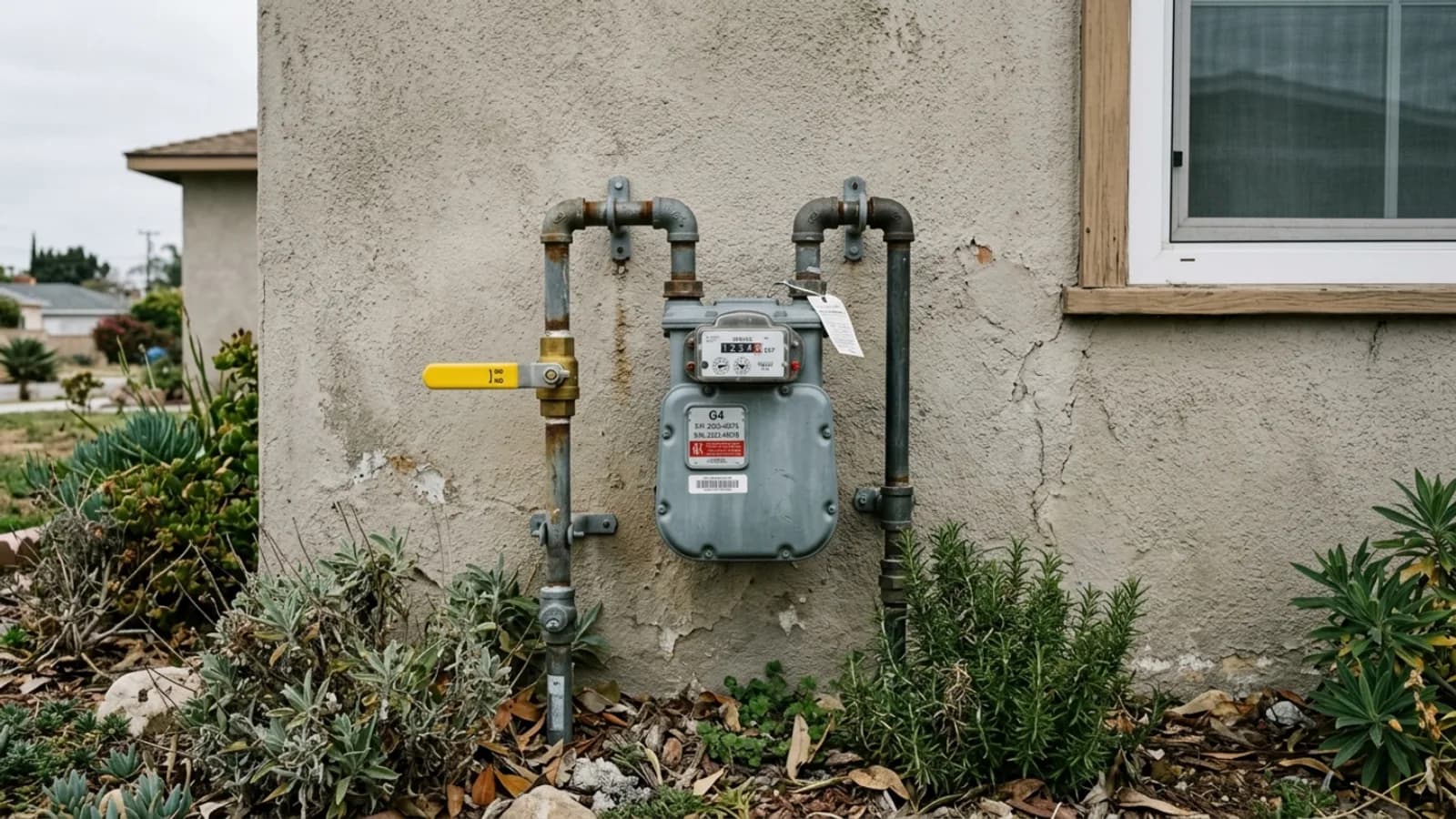
Natural gas is one of the most efficient and cost-effective energy sources available to homeowners in Riverside County. Water heaters, stoves, furnaces, dryers, and fireplaces in communities like Temecula, Murrieta, Menifee, Lake Elsinore, Hemet, and Corona rely on it daily. When the system works properly, most homeowners never think about it. When something is wrong, the consequences can be severe. Knowing the basics of your home's gas system, how to recognize a leak, and exactly what to do in an emergency is not optional knowledge — it is a safety responsibility.
Know Your Home's Gas System
A residential gas system includes the meter and main shutoff valve outside, regulators that control line pressure, branch lines running through the house, and individual shutoff valves at each appliance — stove, water heater, furnace, dryer. The main shutoff is at the meter. Knowing where it is and how to operate it is critical. Many appliances also have a small valve on the supply line directly behind them for service without shutting off the whole house. Gas line services — including leak detection, connector replacement, seismic shutoff installation, and new appliance connections — require a licensed contractor. The California State License Board (CSLB) requires a C-36 or C-34 license for gas line work — verify any contractor's license at cslb.ca.gov before hiring. Gardner Plumbing Co. holds CSLB #1073177.
How to Recognize a Gas Leak
Natural gas is colorless and odorless, so utilities add mercaptan — a chemical with a distinct rotten egg or sulfur smell. If that odor is present near gas appliances or anywhere in the home, treat it as a gas leak warning regardless of how faint it seems. Additional clues include a hissing or whistling sound near a gas line or appliance, visually cracked or kinked flexible connectors, or corroded pipe fittings. Outdoors, an underground gas leak may cause nearby plants to turn brown, create bubbles in wet soil, or disturb the ground surface. Physical symptoms — lightheadedness or headache that clears when you step outside — are also a warning sign. Modern diagnostic tools including electronic leak locators, acoustic equipment, and thermal imaging allow professionals to find hidden leaks without damaging finished surfaces. For water-related leak protection, see our post on signs of a hidden water leak — the diagnostic mindset is similar for both utilities.
What to Do in a Gas Emergency
If you smell gas: do not turn light switches on or off, do not unplug appliances, do not use your phone inside the house, and do not light matches. Even a small spark can ignite accumulated gas. Evacuate immediately — people and pets out, a safe distance away. Leave doors and windows open on the way out if it does not slow evacuation. Once outside, call SoCalGas (1-800-427-2200) or 911. If the main shutoff at the meter is accessible and it is safe to reach it, turn the valve a quarter turn so it is perpendicular to the pipe. Gas service must be restored only by the utility or a licensed professional after the system is inspected and repaired.
Carbon Monoxide: The Invisible Threat
Carbon monoxide (CO) is produced when fuel burns incompletely — a malfunctioning furnace, water heater, or blocked vent can allow it to build up indoors. CO is colorless and odorless; exposure causes headache, dizziness, nausea, and in high concentrations, incapacitation. Every home with gas appliances needs working CO detectors on each level and near sleeping areas. Test detectors monthly, replace batteries per manufacturer instructions, and replace units when they reach their end-of-life date (typically five to seven years). If a CO alarm sounds, get everyone outside immediately and call 911. Annual furnace and water heater inspections by a licensed technician verify proper combustion and venting. For water heater maintenance in particular, see our guide on tank water heater maintenance.
Preventive Maintenance That Reduces Risk
Annual inspections by a qualified technician cover gas pressures, flexible connector condition, sediment trap installation, venting and combustion air, and shutoff valve and regulator condition. Older uncoated brass flexible connectors should be replaced with modern CSA-listed stainless-clad models. In Riverside County's seismically active region, automatic seismic gas shutoff valves stop gas flow during significant ground movement — a meaningful risk reduction that should be installed by a licensed professional and tested per manufacturer instructions. Before any digging project on your property, call 811 to have utility lines marked. Gas lines may not be as deep as expected. Gardner Plumbing Co. provides gas line leak detection, connector replacement, seismic shutoff installation, and appliance connection services across Riverside County — with flat-rate pricing and full documentation of every finding. When a gas leak is suspected, call immediately. Do not wait.
Seismic Shutoff Valves: A Riverside County Priority
Riverside County sits within one of the most seismically active regions in California. The San Jacinto Fault Zone — one of the most hazardous fault systems in the state — runs directly through the eastern portion of the county, passing near Hemet, San Jacinto, and the mountain communities. The Elsinore Fault, another major active fault, runs through Lake Elsinore, Wildomar, Murrieta, and Temecula. Significant ground movement along either system can rupture gas supply lines and connections inside walls before any visible damage appears outside the home. An automatic seismic shutoff valve — also called an earthquake gas shutoff valve — detects ground acceleration and shuts off gas flow at the meter automatically when shaking exceeds a threshold. California Health and Safety Code Section 19100 requires these valves on new construction in designated seismic areas, and many communities encourage or require them on existing homes during permit-triggering renovations. Installing a seismic shutoff valve proactively is one of the highest-value gas safety upgrades a Riverside County homeowner can make — the cost is modest relative to the protection it provides. Gardner Plumbing Co. installs and certifies seismic shutoff valves throughout the service area. CSLB #1073177.
Gas line concern? Call (951) 246-4337 immediately. Gardner Plumbing Co. (CSLB #1073177) serves Temecula, Murrieta, Menifee, Lake Elsinore, Hemet, Corona, and 19+ additional cities across Riverside County.