Repiping
Signs Your Home Needs Repiping
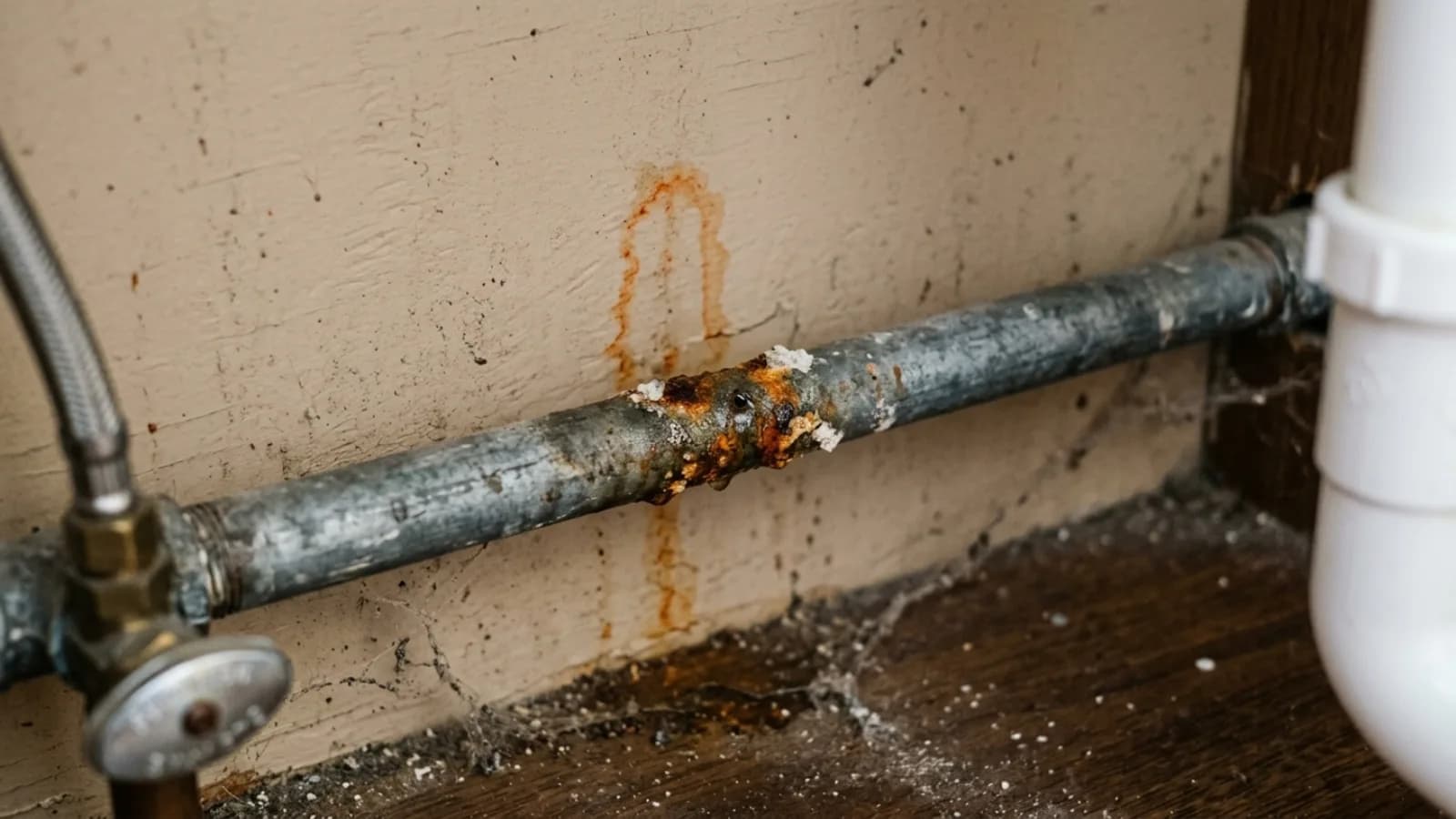
Pipes do not last forever. Galvanized steel, polybutylene, and thin-wall copper all have a design life — and when a system reaches that point, individual spot repairs become a cycle that costs more than it solves. For homeowners in Temecula, Murrieta, Menifee, Lake Elsinore, Hemet, and Corona, recognizing the signs that a home needs repiping early can prevent water damage and restore reliable water pressure and quality throughout the house.
Age and Pipe Material
Homes built before the 1970s were often plumbed with galvanized steel. After decades of use, the protective zinc coating wears away and internal rust restricts flow. Homes from the late 1970s through mid-1990s may have polybutylene — a gray plastic pipe that was recalled and removed from production because it becomes brittle and fails unpredictably. Even copper can develop pinhole leaks when water chemistry or stray electrical currents accelerate corrosion, a known issue in parts of Riverside County. Understanding what pipe material your home has is the first step. A licensed plumber can identify materials and assess condition during a 65-point plumbing inspection. For a breakdown of how each material behaves, see our guide on pipe materials.
Recurring Leaks in Different Locations
One leak in one spot is a spot repair. Leaks appearing in different areas of the home over months or years signal a systemic problem: the entire pipe material is failing, not one section. Patching individual leaks shifts pressure to other weakened points and often accelerates failure elsewhere. When a homeowner has called a plumber multiple times in a single year for leaks in different rooms, a whole-house assessment is the smarter path. The EPA's Fix a Leak Week campaign notes that household leaks waste nearly one trillion gallons annually — recurring leaks from aging pipe systems are a significant contributor.
Low Water Pressure and Discolored Water
As galvanized pipes rust from the inside, scale buildup narrows the interior diameter. Flow at every fixture weakens. Turning on the kitchen sink causes the shower to drop noticeably. Multiple fixtures running at once produces very little pressure at any of them. Brown, yellow, or rusty water — especially on the hot side — points to internal corrosion. Blue-green stains on sinks or tubs indicate copper corrosion. A metallic taste confirms minerals are entering the water column. These are not cosmetic issues; they are water-quality and infrastructure-health concerns. Pairing a repipe with a whole-house water filtration system protects new pipes from the same mineral-driven corrosion that damaged the old ones.
Unexplained Water Bill Spikes and Slab Leak Indicators
Hidden leaks in walls or under the slab can drive water bills up without any visible sign of a problem. The meter test confirms it: shut off every fixture and appliance, then check the meter's low-flow indicator. If it moves, water is escaping. In Riverside County's slab-on-grade homes, hot spots on the floor, damp carpet, or the sound of running water when no fixtures are on can indicate a slab leak. When a slab leak or burst pipe is suspected, call immediately — every minute of running water increases damage and repair cost.
The Riverside County Hard-Water Factor
Riverside County's water supply runs 12–20 grains per gallon of hardness in most communities — significantly above the 7 GPG threshold that water treatment specialists consider the point where scale damage becomes meaningful. At these hardness levels, scale builds inside copper pipes, collects at solder joints, and accumulates inside shutoff valves over time. Homes where galvanized steel has already been in place for 50+ years often have interior pipe diameters reduced by 50% or more from rust and mineral accumulation. The pressure drop at fixtures is proportional to that restriction. Homes where copper was installed in the 1980s or early 1990s and used without any hardness treatment often show early pinhole leak activity by the time the pipe reaches 30–40 years of service. This is not a flaw in the copper itself — it is the predictable result of sustained hard-water exposure accelerating oxidation at microscopic surface imperfections in the pipe wall. A repipe without addressing water quality simply starts the same clock over again on new pipe. That is why Gardner Plumbing Co. recommends evaluating a whole-house water softener or filtration system alongside any significant supply-line repair or repipe project.
What Repiping Involves and How Gardner Approaches It
Gardner Plumbing Co. uses thermal imaging, acoustic equipment, and electronic leak locating to assess the system before recommending a repipe. Diagnostic findings are documented with photos and video so homeowners see exactly what the technician sees. Options presented typically include spot repairs, partial repipes, and whole-house repiping — each with pros, cons, and upfront flat-rate pricing. Modern PEX or copper supply lines replace aging material. For homes wanting automated protection after a repipe, Moen Flo whole-home monitoring adds real-time leak detection and automatic shutoff. Financing is available for qualifying projects. CSLB #1073177.
Recurring leaks or low pressure? Call (951) 246-4337 — no trip fees, no obligation. Gardner Plumbing Co. serves Temecula, Murrieta, Menifee, Lake Elsinore, Hemet, and 20+ additional cities across Riverside County.