Plumbing Basics
Understanding Pipe Materials: Copper, PEX, PVC, and Galvanized
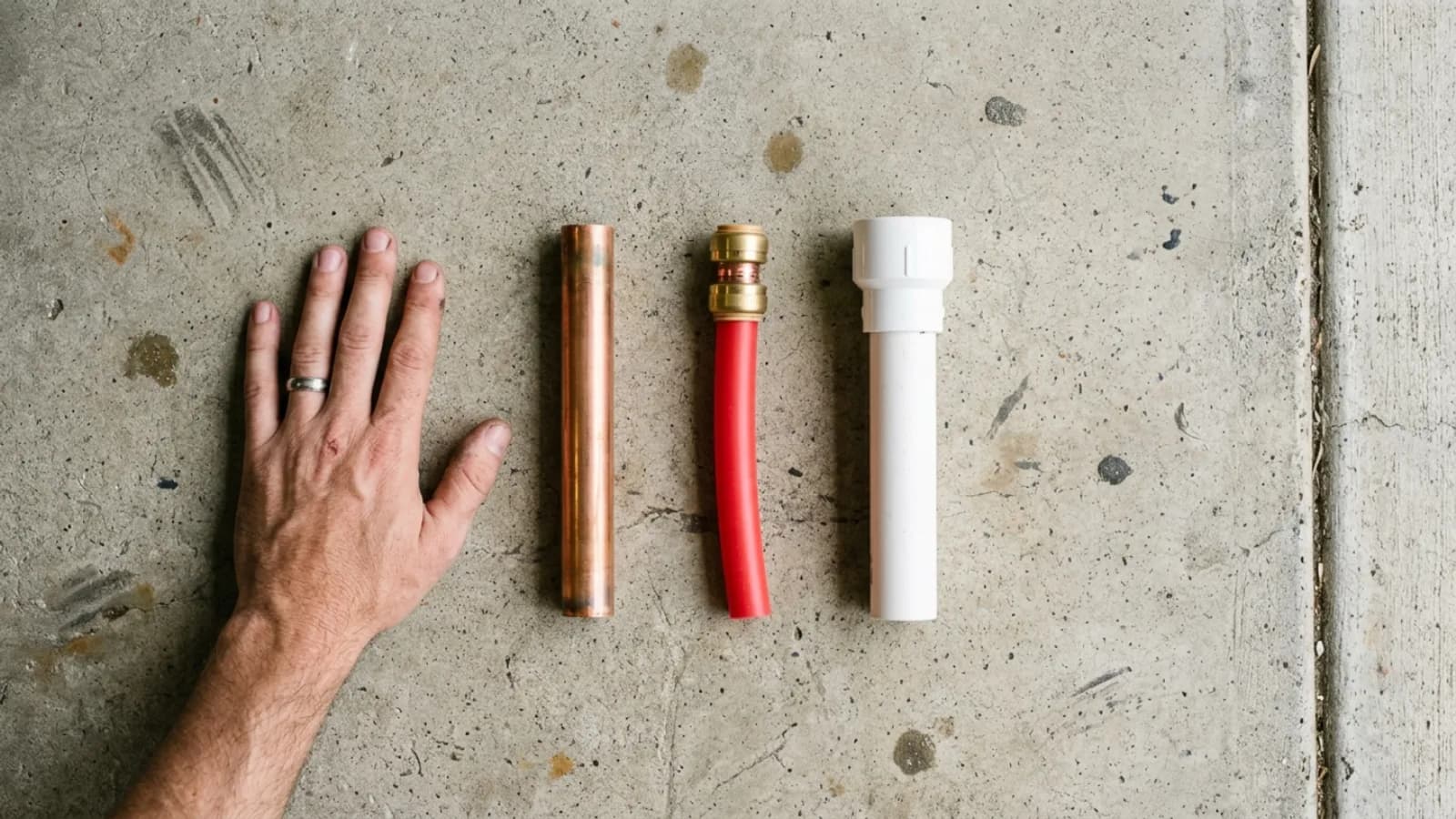
The pipes behind your walls, under your slab, and in your attic are mostly invisible — until something goes wrong. For homeowners in Riverside County, where summers push past 105°F and water runs hard with calcium and magnesium, the type of pipe material affects how long your plumbing lasts, how it handles repairs, and what your options are when something fails. Understanding the four most common materials makes conversations with a plumber more productive and helps you evaluate repair options with confidence.
Copper
Copper has been the standard choice for interior water supply lines for decades. It handles high pressure, tolerates heat, resists many types of corrosion, and is naturally bacteriostatic — meaning it inhibits bacterial growth in the water column. Type L copper (thicker wall) is standard for interior supply lines and repipes. Type M (thinner) appears in some older installs to reduce cost. Type K, the thickest, is often used underground.
The trade-off in Riverside County's hard-water environment is pinhole leaks. Aggressive water chemistry and stray electrical currents can pit copper over time, particularly in older homes in areas like Hemet, Perris, and San Jacinto. Homes with recurring copper pinhole leaks may benefit from exploring repiping options alongside a water filtration system to reduce the mineral load on new pipe.
PEX (Cross-Linked Polyethylene)
PEX is the most common material used in modern repipes. Its flexibility allows long runs with fewer fittings, which reduces potential leak points in walls and attics. PEX resists scale and chlorine, installs faster than copper (meaning shorter projects and fewer wall openings), and can expand slightly if water freezes inside — a meaningful advantage during Riverside County's occasional cold snaps. PEX-A is the most flexible type and pairs with expansion fittings. PEX-B is slightly stiffer and uses crimp or clamp fittings. PEX should not be left in direct sunlight and should be insulated in attic runs to limit heat gain during summer. For homes on slab, PEX is typically sleeved where it passes through concrete. For more on how a full repipe project unfolds, see our guide on what to expect during a whole-house repipe.
PVC and CPVC
PVC (polyvinyl chloride) is the standard material for drain, waste, and vent (DWV) systems — the pipes that carry wastewater away, not supply water. It is lightweight, corrosion-resistant, and joined with primer and solvent cement. ABS (black plastic) serves the same DWV role and is equally common in Southern California. Neither PVC nor ABS should be used for hot water supply lines, as heat causes warping. CPVC — a cream or tan relative of PVC — is rated for higher temperatures and appears in some older supply systems, though modern repipes in Riverside County now almost always use PEX or copper. According to IAPMO standards, all pipe materials used in residential plumbing must meet certified performance thresholds for pressure, temperature, and material safety.
Galvanized Steel
Galvanized steel was the standard supply pipe material in homes built before the 1960s. The zinc coating was designed to prevent rust — but over decades it wears away, and internal corrosion builds up. The result is reduced pressure (the interior narrows as rust accumulates), discolored water, stuck shutoff valves, and weeping threaded joints. A magnet test helps identify steel versus copper: steel is magnetic, copper is not. If a home still has original galvanized supply lines — common in older neighborhoods in Riverside, Perris, and San Jacinto — a full repipe is typically the most reliable long-term solution. Patching individual sections shifts pressure to other weak spots and extends a problem that is systemic rather than isolated. Our post on signs a home needs repiping walks through the full picture.
How to Identify What Is in Your Home
Most homeowners have no idea what type of pipe runs through their walls until a leak forces the question. A few quick checks narrow it down before you call a plumber:
- Magnet test: Hold a refrigerator magnet against an exposed supply pipe. Galvanized steel is magnetic; copper and PEX are not. This rules out the two extremes immediately.
- Color and texture: Copper is orange-brown and develops a greenish patina with age. PEX is flexible plastic — red for hot lines, blue for cold, white for either. Galvanized is dull silver-gray and often shows rust around fittings. CPVC is cream or light yellow and rigid.
- Build year as a guide: Homes built before 1970 in Riverside, Hemet, Perris, and San Jacinto frequently have galvanized supply lines. Homes built 1970–1990 in the Inland Empire often have copper. Homes built after 2000 in Temecula, Murrieta, Menifee, and Eastvale are likely PEX or copper. This is a guide only — many homes have been partially repiped over the years and contain a mix.
- Look at the water heater connections: The supply and hot-out stubs at the water heater are usually exposed and the most accessible point to identify pipe material without opening walls.
A licensed plumber can confirm materials, assess condition, and present options during a diagnostic visit — no guesswork required.
Questions about your pipe material or a repair option? Call (951) 246-4337 — no trip fees, no obligation. Gardner Plumbing Co. (CSLB #1073177) serves Murrieta, Temecula, Menifee, Riverside, Corona, and 20+ additional cities across Riverside County.
Choosing the Right Material for Your Home
For supply lines, PEX and copper are the two best options today — each with a clear profile of strengths. For drainage, PVC or ABS is standard. Mixing dissimilar metals requires dielectric unions to prevent galvanic corrosion. Gardner Plumbing Co. presents multiple options with pros and cons and upfront flat-rate pricing before any work begins. That transparency is the Written Estimate Before Work Begins commitment under The Gardner Promise — and it is the only way a homeowner can make an informed decision about a repair or repipe.