Repiping
What to Expect During a Whole-House Repipe
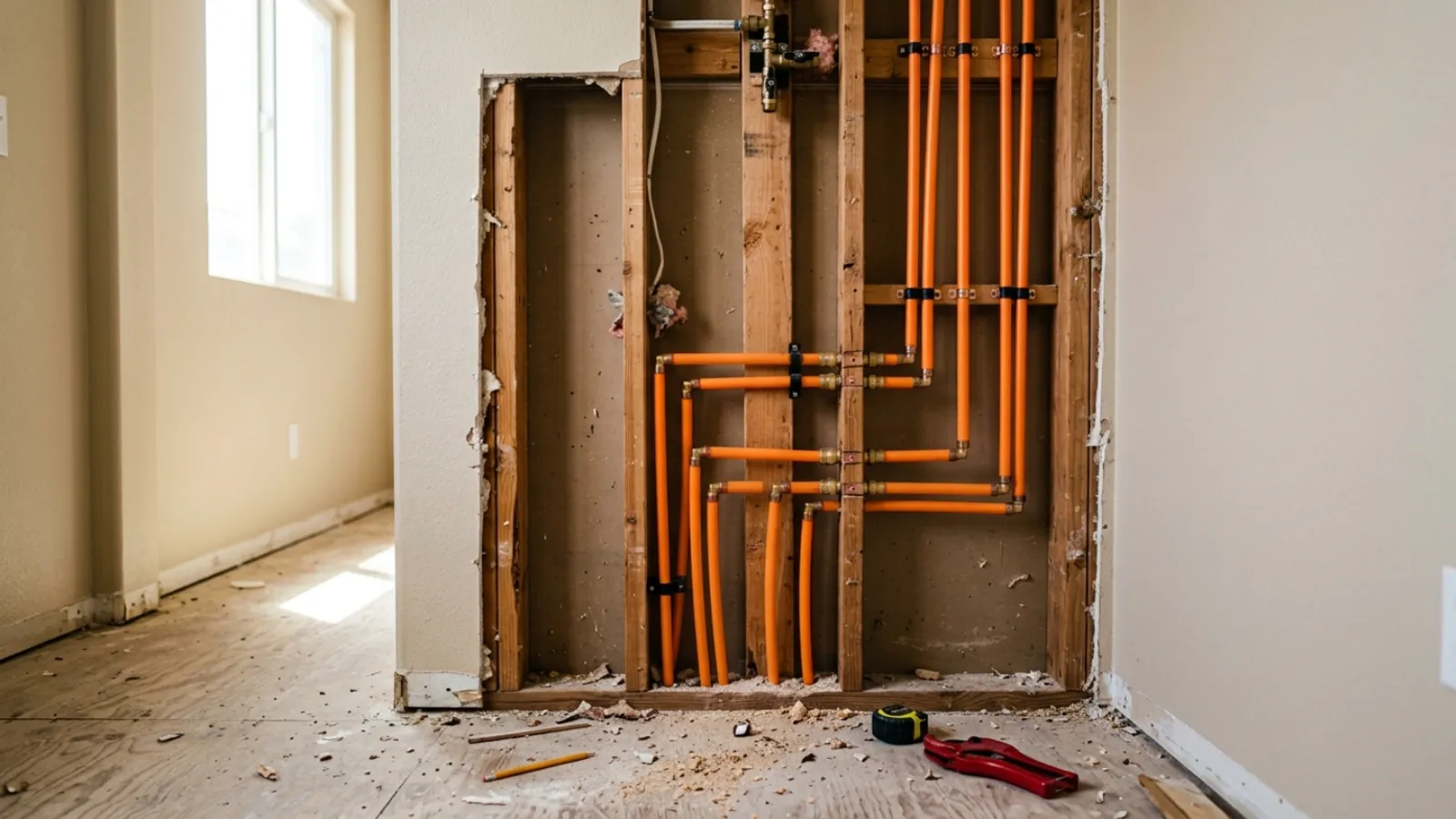
A whole-house repipe replaces all water supply lines throughout the home. It is one of the larger plumbing projects a homeowner can undertake, and the combination of wall access, temporary water shutoffs, and permit requirements can feel overwhelming. For homeowners in Temecula, Murrieta, Menifee, Lake Elsinore, Hemet, and Corona who are facing recurring leaks, low pressure, or failing pipe material, understanding how the process works from start to finish is the best preparation. If you are still deciding whether a repipe is actually needed, see our guide on signs a home needs repiping first.
Phase 1: Inspection and Consultation
Every repipe begins with a thorough inspection. A technician evaluates existing pipe materials, measures water pressure, maps fixture locations, and identifies the condition of shutoff valves. Gardner Plumbing Co. uses thermal imaging, electronic leak locating, and video or photo documentation so homeowners see exactly what the technician sees before any commitment is made. The consultation covers material choices — PEX or copper — scope of work, permit and inspection requirements, timeline, and a flat-rate estimate. The two most common material options are PEX, which is flexible, cost-effective, easier to route with fewer wall openings, and resistant to scale; and copper, which has a long track record and handles heat exposure well. Many homeowners choose financing for repipe projects; options are available for qualifying work. Permit and inspection requirements in California mean most repipes require a licensed contractor and code inspection — Gardner Plumbing Co. handles both.
Phase 2: Preparation and Protection
Before work begins, homeowners clear areas under sinks, in vanities and closets, and around the water heater. Gardner Plumbing Co. technicians lay drop cloths, use shoe covers, install dust-control barriers where practical, and protect flooring and finishes. Water is coordinated around the homeowner's schedule — shutoffs occur during necessary work windows, and water is typically restored at the end of each workday. Filling containers with water, planning simple meals, and setting aside hygiene supplies helps manage daily life during multi-day projects. Understanding your full repiping service options before the project starts helps ensure the right scope is chosen from day one. Many homeowners with aging galvanized pipe also have concerns about hard water damage to existing pipes and fixtures — a repiping project is the ideal time to address both issues together.
Phase 3: Installation
Technicians access wall and ceiling cavities through strategic, minimal cuts — typically ranging from small 4x4-inch access patches to larger openings where multiple lines converge. In Riverside County's slab-on-grade homes, overhead repipes routed through walls and attics are the standard approach to avoid cutting the slab. PEX's flexibility reduces the number and size of access points compared to rigid copper. Lines are fastened correctly, nail plates are placed where pipes pass near studs, and fire-stopping materials are added where required. Angle stops and supply lines at each fixture are replaced. Main shutoff valves and hose bibs are typically upgraded to modern ball valves during a repipe — a meaningful improvement for long-term maintenance. The California State License Board (CSLB) advises homeowners to always verify a contractor's license before any major plumbing project.
Phase 4: Testing, Inspection, and Patching
Once piping is complete, the system undergoes a pressure test at the specification required by local code. After the inspection sign-off, every fixture is checked for flow and leaks. Lines are flushed for several minutes to clear harmless debris and air — brief cloudiness clears quickly. Cleaning aerators and showerheads after the first flush restores full flow. Drywall patching, texture matching, and painting are the final step — homeowners should confirm whether this is included in the contractor's scope or coordinated separately. A typical single-family home repipe in Riverside County takes two to five days depending on size, fixture count, and access. After completion, the technician walks through main shutoff location, manifold valves, pressure regulator, and water heater connections, and provides permit and warranty documentation. CSLB #1073177.
Common Questions Homeowners Ask Before Committing
After 30+ years performing repipes across Riverside County, the Gardner Plumbing Co. team has heard the same questions consistently. Here are honest answers to the most common ones:
- Will we have water during the project? Yes. Water is shut off only during active work windows, typically a few hours per day. It is restored at the end of each workday so homeowners can use the home normally overnight.
- How much drywall gets cut? With PEX, access points are minimized because flexible tubing can run long distances without midwall fittings. A typical 3-bedroom slab home may need 10–20 small access patches, not full-wall demolition.
- Do I need a permit? Yes, for a whole-house repipe in California. A permit means a city inspector verifies the work meets code before walls are closed — which protects the homeowner, not just the contractor. Gardner Plumbing Co. pulls all required permits.
- Should I also address hard water at the same time? It is the ideal time. Installing a softener or filtration system immediately after a repipe protects new pipe from the same hard-water conditions that damaged the old pipe. Doing it later means a separate service call and potentially reopening a wall to access the supply line entry point.
- What warranty applies? Gardner Plumbing Co. backs every repipe with The Gardner Promise — including the 30-Day Callback Guarantee. If any issue related to the installation surfaces within 30 days, a technician returns at no charge, parts and labor covered.
Ready for a repipe estimate? Call (951) 246-4337 — no trip fees, no obligation. Gardner Plumbing Co. serves Temecula, Murrieta, Menifee, Lake Elsinore, Hemet, Corona, and 19+ additional cities across Riverside County.