Seasonal
Spring Plumbing Checklist for Riverside County Homeowners
Riverside County winters are mild compared to much of the country, but even a handful of cold nights can stress outdoor fixtures, leave sediment in water heaters, and let debris collect in drains. By the time spring arrives in Temecula, Murrieta, Menifee, Lake Elsinore, Hemet, and Corona, every one of those small issues is worth addressing before summer temperatures climb past 105°F and put additional demand on the entire plumbing system. The ten items below form a practical spring inspection routine that most homeowners can complete in a single Saturday — and they flag the handful of issues best left to a licensed plumber before they become expensive emergencies.
1. Inspect Exposed Pipes and Hose Bibs
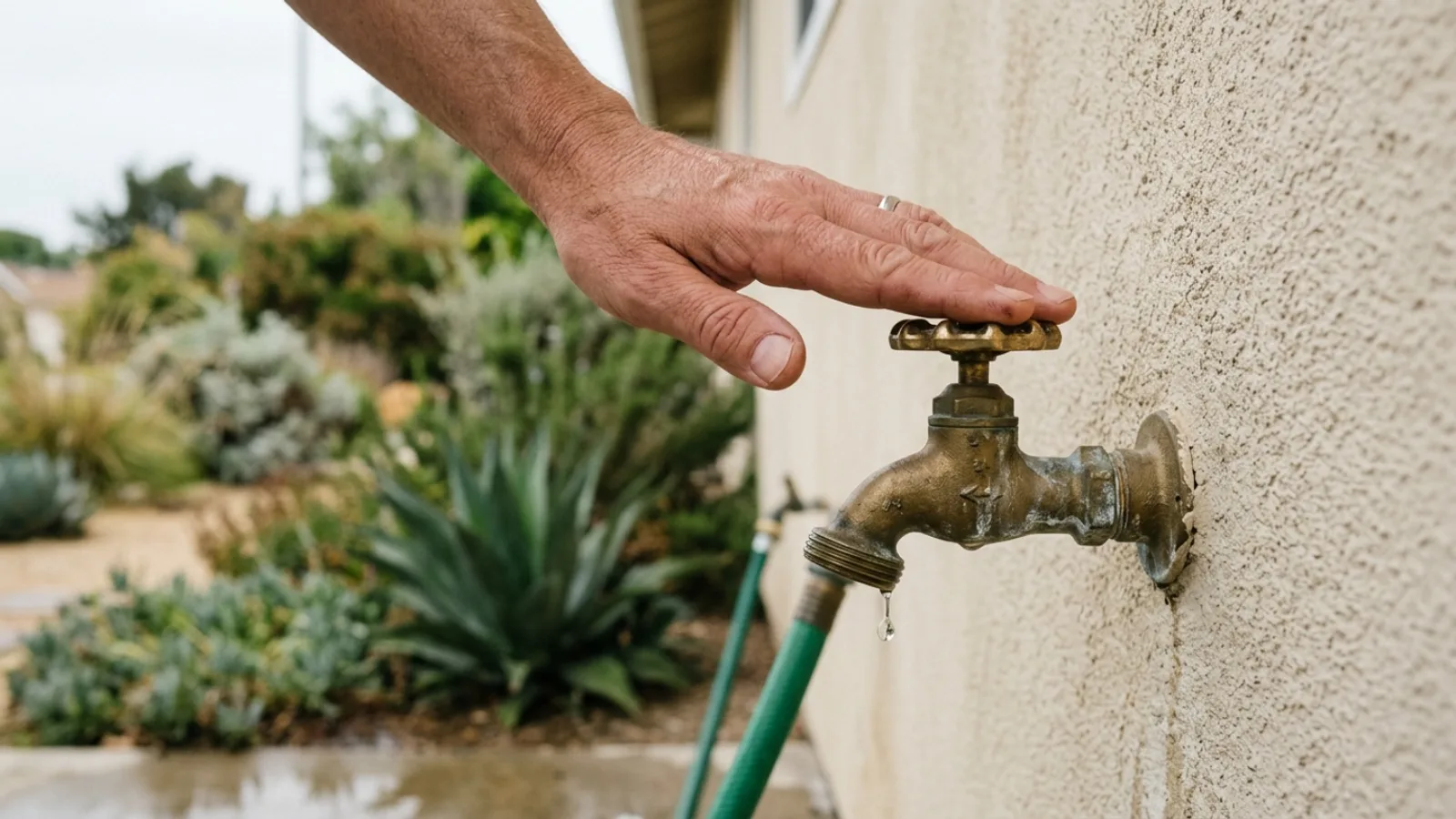
Even in Southern California, temperature swings between a cold January night and a warm afternoon can stress exposed supply lines in attics, garages, and along exterior walls. Walk the perimeter of the house and examine each outdoor hose bib for drips, corrosion around the packing nut, or a cracked vacuum breaker. A dripping hose bib may only waste a gallon per day in spring, but left running through summer it can waste hundreds of gallons per month. Replace worn hose washers now — they cost less than a dollar — and have a licensed plumber evaluate any bib that leaks from the handle or wall fitting rather than the spout end.
2. Flush the Water Heater to Clear Winter Sediment
Riverside County water runs hard — typically 12–20 grains per gallon of calcium and magnesium — and tank water heaters accumulate sediment from that mineral load every month they operate. Winter's heavier hot-water use speeds that process. Flushing the tank in spring removes the sediment layer that insulates water from the burner, forces the heater to run longer cycles, and causes the rumbling or popping sounds many homeowners hear as the season changes. Most manufacturers recommend annual flushing; in hard-water areas, twice a year is not excessive. If the drain valve weeps after flushing or the anode rod has not been inspected in three or more years, schedule a professional water heater service appointment to evaluate both.
3. Exercise the Main Shutoff Valve
The main water shutoff valve is the single most important piece of emergency hardware in any home — and most homeowners have never turned it. Gate valves in older Riverside County homes can seize from mineral deposits after years without movement. Turn the valve off, confirm flow stops at an interior tap, then turn it back on. If the valve requires significant force, fails to fully stop flow, or leaks around the stem after turning, have it replaced. A stuck shutoff during a burst pipe or slab leak turns a containable event into a serious water-damage claim. Our guide on locating and using your main shutoff valve walks through the full process step by step.
4. Check PRV Pressure
A pressure reducing valve (PRV) keeps municipal supply pressure — which can exceed 100 PSI in some Riverside County zones — down to the 50–80 PSI range that residential plumbing is designed for. PRVs have a service life of roughly 10–15 years, and a failing PRV can let pressure creep upward without any obvious warning until faucet cartridges start leaking or the water heater's relief valve begins dripping. Attach a simple pressure gauge to an outdoor hose bib in spring. If the reading is consistently above 80 PSI or fluctuates unexpectedly, have the PRV evaluated and adjusted or replaced. Pairing a functioning PRV with a thermal expansion tank is also important on closed water systems — your plumbing and repiping service team can assess both.
5. Descale Aerators and Showerheads
Hard water deposits accumulate inside faucet aerators and showerhead nozzles all year. In spring, unscrew aerators from kitchen and bathroom faucets and soak them in white vinegar for 30–60 minutes to dissolve the scale, then rinse and reinstall. Showerheads can be soaked in a bag of vinegar secured around the fixture. Restored aerators improve flow rate and reduce the uneven spray patterns that signal a nearly blocked nozzle. If a faucet has been dripping or the handle feels stiff, a spring cleaning is also a good time to inspect the cartridge or O-rings — hard water degrades rubber seals faster than soft water, and a worn cartridge that drips once per second can waste more than 3,000 gallons annually.
6. Inspect the Irrigation System and Sprinkler Timer
Spring is when most Riverside County homeowners reactivate irrigation systems on full summer schedules — and when small leaks that went unnoticed over winter suddenly show up as soggy patches or elevated water bills. Walk each irrigation zone while it runs. Look for broken or tilted sprinkler heads, spray patterns hitting hardscape instead of planting areas, and zones that drain slowly after the cycle ends (a sign of check-valve failure). Review the controller schedule and update it for current season conditions rather than leaving last summer's program running. The EPA WaterSense program estimates that smart irrigation scheduling can reduce outdoor water use by up to 15 percent without harming landscaping — a meaningful saving in a region where outdoor water use dominates summer bills.
7. Test the Sump Pump Before Spring Rains
Riverside County receives most of its annual rainfall between November and April, and a sump pump that has sat idle through winter may fail exactly when it is needed. Pour a bucket of water slowly into the sump pit to confirm the float trigger activates and the pump discharges correctly. Check the discharge line to confirm it is clear of debris and directing water well away from the foundation. If the pump runs but takes longer than expected to clear the pit, the impeller may be partially blocked or the unit may be nearing the end of its service life. Sump pump failure during a spring rain event is among the most preventable causes of finished-basement and crawlspace water damage in the region.
8. Clear Outdoor Drains of Winter Debris
Leaves, soil, and organic material accumulate in yard drains, patio drains, and downspout extensions through winter. That debris creates a partial blockage that restricts flow during spring rains and sends water toward the foundation instead of away from it. Remove debris from every visible drain opening, lift any catch-basin grates and clear the sumps, and confirm that downspouts are connected and directing water at least four feet from the foundation. If any outdoor drain is slow or completely blocked, a professional drain cleaning service can clear the line and inspect for root intrusion — a common finding in Riverside County neighborhoods with mature eucalyptus or pepper trees.
9. Check the AC Condensate Drain Line
As temperatures begin rising in spring, air conditioners start producing condensate — typically one to three gallons per hour of operation. The condensate drain line runs from the indoor air handler to a floor drain, utility sink, or outdoor discharge point. Algae, mold, and debris plug these lines over winter, and a blocked condensate line can trigger a safety float switch that shuts down the AC or, in units without a float switch, overflow onto the ceiling or into the wall cavity. A simple spring maintenance step is to pour a cup of white vinegar into the condensate pan or access port to kill algae growth, then confirm flow reaches the discharge point. If the line is blocked or the pan shows standing water, have the line cleared before the first heat wave arrives — this is a natural handoff point between your plumbing maintenance and HVAC seasonal prep.
10. Check Your Water Bill as a Leak Baseline
Pull your water bills from the past three months and establish a winter baseline. If spring usage rises significantly without a change in habits or irrigation schedule, a hidden leak is the most likely explanation. Common culprits include slab leaks — particularly in Temecula, Murrieta, and Menifee where concrete slab construction dominates — toilet flappers that allow silent tank-to-bowl seepage, and service line leaks between the meter and the house. A simple meter test confirms or rules out an active hidden leak in under five minutes: shut off every fixture and appliance, then watch the meter's low-flow indicator. If it moves with everything off, water is escaping somewhere. For a deeper look at what that might indicate, our guide on signs of a hidden water leak in Riverside County covers the full range of symptoms.
Schedule a Professional Spring Inspection
Working through this checklist identifies what is visible from the surface. A professional 65-point plumbing inspection goes deeper — using thermal imaging, acoustic sensors, electronic leak locating, and a sewer camera to evaluate what is behind walls, under the slab, and inside the lateral line. It is the diagnostic layer that turns spring maintenance from a surface check into a full-system picture. Gardner Plumbing Co. also offers annual maintenance plans that time professional inspections around seasonal needs so nothing falls through the cracks between spring and summer. When summer heat peaks, the time for preparation is already past — the work done now is what keeps plumbing reliable through July and August. For what comes next, see our guide on summer plumbing tips for Riverside County.
Ready to check every item off this list with professional backup? Call (951) 246-4337 — no trip fees, no obligation. Gardner Plumbing Co. (CSLB #1073177) serves Temecula, Murrieta, Menifee, Lake Elsinore, Hemet, and 20+ additional cities across Riverside County.