Water Heaters
Tankless vs. Tank Water Heaters: Which Is Right for Your Home?
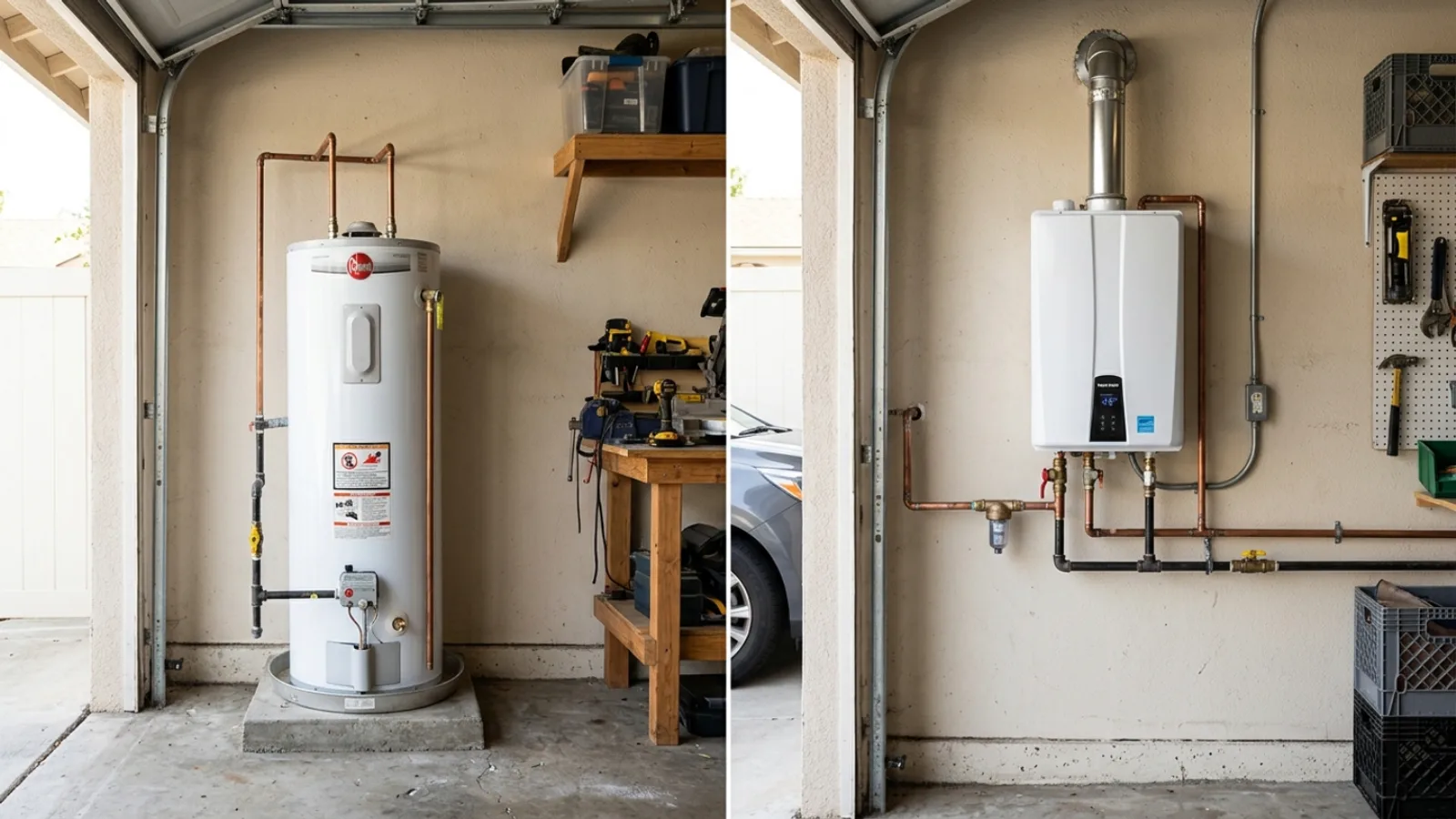
When a water heater reaches the end of its service life, homeowners in Riverside County face a choice that was simpler a decade ago: stick with the same type of tank unit, or upgrade to a tankless system. Both technologies deliver hot water reliably, but they work differently, cost differently to install and operate, and suit different household needs. Making the right call requires honest comparison — not a sales pitch.
How Tank Water Heaters Work
Traditional tank water heaters store a fixed volume of water — typically 40 to 80 gallons — and keep it hot inside an insulated tank around the clock. The advantage is a large, immediate supply of hot water that is available the moment a faucet opens. Tank heaters also have a lower upfront purchase price and, when replacing a like-for-like unit, can often be swapped out in a few hours.
Natural gas tank models heat water faster and typically cost less to run than standard electric tanks. Electric models are simpler to install where gas is unavailable. A key spec to compare when sizing a replacement is the first-hour rating (FHR) — how much hot water the heater can deliver in the first 60 minutes of heavy use. This matters more than tank volume alone for busy households with back-to-back showers or simultaneous laundry and dishwasher use.
The primary drawback of tank systems is standby energy loss. The heater must maintain temperature continuously — even at 3 a.m. when no one is using water. This standby heat loss accounts for a meaningful portion of a home’s energy use. Once the stored hot water is depleted, the household must wait for recovery before the next round of heavy use.
How Tankless Water Heaters Work
Tankless (on-demand) heaters heat water only as it is needed. High-powered burners or heating elements warm water as it flows through the system when a faucet or appliance calls for hot water. Because there is no stored volume to maintain, standby energy loss is eliminated. Properly sized and installed units provide a continuous flow of hot water that does not run out — a significant advantage for households with high demand.
Sizing a tankless unit requires understanding flow rate demands rather than tank volume. Units are rated in gallons per minute (GPM) at a given temperature rise. A shower might use 2 to 2.5 GPM; a sink might use 1 to 1.5 GPM. If both run simultaneously, the unit must handle the combined flow. Incoming water temperature in Riverside County is generally moderate, which helps performance — but proper sizing by a licensed plumber is essential to prevent temperature drops when multiple fixtures run at once.
Tankless units are compact and typically wall-mounted, freeing up floor space. Many modern gas models can be installed outdoors in the mild Southern California climate, simplifying venting and saving indoor utility space. With proper maintenance, a tankless unit typically lasts longer than a tank model — often 20 or more years — which helps offset the higher upfront cost over time.
Trade-offs and Considerations
No water heater type is universally superior. The right choice depends on several factors:
- Upfront cost: Tank heaters cost less to purchase and install. Tankless units carry a higher installation price, particularly if gas line upgrades or new venting are required.
- Energy savings: Tankless units reduce energy use, especially in households with moderate to high hot water consumption. The payback period varies with usage patterns and local utility rates.
- Gas line and venting: High-efficiency gas tankless units require a larger gas line (typically 3/4" or larger) and specialized venting. Homes with existing 1/2" gas lines may require an upgrade — a cost that needs to factor into the comparison.
- Cold-water sandwich effect: A brief burst of cool water between hot-water uses when a tap is turned off and quickly back on again is a known characteristic of some tankless units. Built-in recirculation features or smart controls reduce this effect significantly.
- Electric tankless: Whole-home electric tankless units typically require substantial electrical capacity — multiple dedicated 240V circuits — that may not exist in the home. This can make gas tankless a more practical upgrade for many Riverside County homes.
Hard Water and Maintenance Needs
Riverside County’s hard water affects both types of heaters, but in different ways. In tank heaters, minerals settle at the bottom as sediment, reducing efficiency and causing the rumbling sounds many homeowners hear. Annual flushing removes this sediment — a manageable DIY task or professional service. In tankless units, scale accumulates inside narrow heat exchanger channels, triggering error codes and reducing flow rate. Tankless units in hard-water areas need annual descaling service to maintain performance.
Either way, a whole-house water softener or scale-reduction filter addresses the root cause and extends the life of whichever heater you choose. Manufacturers of both tank and tankless units typically recommend whole-house water treatment in areas with high mineral content — Menifee, Perris, and Hemet consistently show higher hardness readings. For more on hard water impacts on your home, see our post on how hard water damages pipes and fixtures.
Incentives, Permits, and Installation
High-efficiency water heaters — particularly gas condensing tankless units and heat pump water heaters — may qualify for utility rebates and federal tax credits. Program rules change frequently, so confirm current availability before making a decision. Most water heater replacements require permits in California. A licensed contractor determines applicable requirements, handles permitting, installs required accessories such as seismic straps and expansion tanks, and ensures code-compliant venting and gas connections. The ENERGY STAR water heater program lists certified models and available incentives by region.
Gardner Plumbing Co. helps homeowners evaluate current system condition, usage patterns, water quality, and budget to find the right replacement. Technicians present tank and tankless options side by side with honest pros and cons, available add-ons like recirculation and expansion tanks, and a clear professional recommendation. For a fast estimate on a new unit, see our water heater service page for details on what the appointment covers. Same-day replacement is available in many cases. Financing is available for qualifying projects. The company holds CSLB #1073177 and has served Riverside County homeowners for 30+ years.
Ready to replace your water heater? Call (951) 246-4337 — no trip fees, no obligation. Gardner Plumbing Co. serves Temecula, Murrieta, Menifee, Lake Elsinore, Hemet, Corona, and 20+ additional cities across Riverside County.
The Right Heater for the Right Home
A tank heater makes sense when budget is a priority, when a same-day replacement is needed, or when the home’s gas line and electrical capacity would require expensive upgrades to support a tankless system. A tankless unit makes sense when energy savings matter over the long term, when space is limited, or when continuous hot water for a large or high-demand household is the goal. Neither answer is always right — the correct choice depends on honest assessment of the specific home, and that assessment is what a Gardner Plumbing inspection is built to provide.