Water Quality
How Water Quality Affects Your Plumbing Fixtures and Appliances
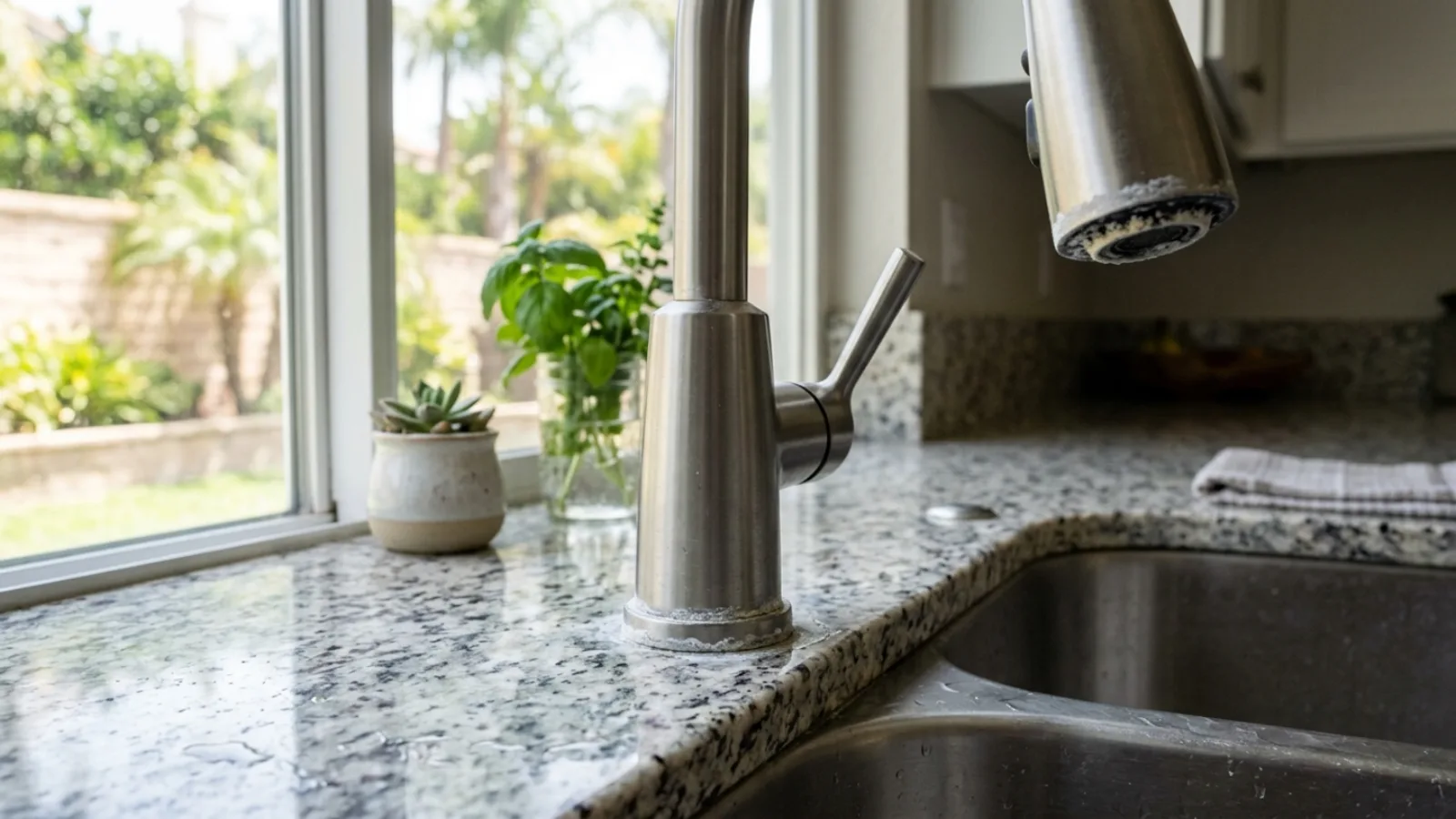
When homeowners in Temecula, Murrieta, Menifee, Lake Elsinore, Hemet, and other Riverside County communities turn on the tap, they expect clean, clear water — and they get it. The municipal water supply meets health standards for consumption. But the physical characteristics of that water — its mineral content, its disinfectant treatment, its pH level — interact with the home's plumbing system in ways that are invisible in the short term and expensive in the long term. Understanding how water quality affects fixtures and appliances helps homeowners make smarter decisions about treatment, maintenance schedules, and when to invest in protection before repairs become unavoidable.
The Hard Water Problem in Riverside County
The most significant water quality issue in Southern California is hardness. Riverside County water typically tests in the "hard" to "very hard" range — 8–20 grains per gallon of dissolved calcium and magnesium. As hard water flows through pipes and is heated in appliances, minerals precipitate out of solution and form a hard, chalky deposit called scale. The higher the temperature and the slower the flow, the faster scale accumulates. In bathrooms and kitchens, the effects become visible within weeks: white spots on glass shower doors, crusty buildup around faucet bases, and progressively reduced flow from clogged showerhead nozzles and aerators. These mineral deposits also degrade rubber O-rings and washers inside faucet cartridges, accelerating the drip that leads to a repair call. Soap does not lather efficiently in hard water either — higher soap usage is a daily cost that compounds across years of hard-water exposure.
What Hard Water Does to Water Heaters
Water heaters are the appliance most visibly damaged by hard water. In a tank-style unit, minerals settling to the tank bottom form an insulating sediment layer that forces the burner or heating element to work longer and harder to deliver the same amount of hot water. Sediment explains the rumbling or popping sounds many homeowners hear from their water heaters — the noise is water boiling through sediment pockets beneath the buildup. That thermal stress shortens tank life and increases energy costs. Annual flushing removes sediment before it hardens into a permanent layer; in Riverside County's hard-water environment, flushing twice per year is not excessive. Tankless water heaters are not immune — scale coats the heat exchanger and restricts flow over time, triggering error codes and requiring descaling with a mild acid solution. Most tankless manufacturers recommend annual descaling in hard-water regions. For full guidance on protecting tank-style units, see our post on tank water heater maintenance. Professional water heater service at Gardner Plumbing Co. includes sediment flushing and anode rod inspection as standard components.
Dishwashers, Washing Machines, and Small Appliances
Hard water reduces detergent and soap effectiveness across every appliance it passes through. Dishes emerge from the dishwasher with a white film. Laundry feels stiff and colors look dull. Both symptoms point to minerals interfering with surfactant chemistry. Beyond aesthetics, scale deposits clog the internal fill valves, spray arms, and heating elements in dishwashers, and stress pump seals and valve assemblies in washing machines. Coffee makers, ice makers, and humidifiers accumulate scale on heating surfaces and tubing, producing slow performance and error codes. The cost of appliance repair and replacement due to scale accumulation over a 20-year ownership period in a hard-water region is significant — and largely preventable with appropriate treatment.
Disinfectants, Corrosion, and Pipe Life
Municipal water is treated with chlorine or chloramines to control bacteria through the distribution system. These disinfectants are necessary for public health but are harsh on rubber and certain plastics used in toilet flappers, faucet cartridges, and appliance hoses. Chloramine in particular — a compound of chlorine and ammonia that is more stable than free chlorine and increasingly common in California water systems — degrades rubber faster than chlorine alone and requires specific filtration media to remove effectively. Beyond rubber degradation, water chemistry that is slightly acidic or low in alkalinity can slowly dissolve copper from supply pipes, producing the blue-green staining on sinks and tubs that indicates active copper corrosion. That corrosion leads to the pinhole leaks in copper lines that are responsible for many slab leak events across Riverside County. Managing water chemistry through appropriate treatment reduces this risk over the long term.
Treatment Options and How to Choose
Addressing water quality requires matching the treatment method to the specific problem. Common residential options and their tradeoffs:
- Salt-based ion-exchange water softener: Removes calcium and magnesium hardness effectively. Produces noticeably softer water that extends appliance life and eliminates scale. Requires regular salt addition and periodic regeneration. Some Riverside County water agencies restrict discharge of softener brine; confirm local rules before installing.
- Salt-free scale conditioner: Reduces scale formation without removing minerals from the water. Does not produce brine discharge. Performance varies by water chemistry and flow rate; works best with pre-filtration.
- Catalytic carbon filtration: Removes chlorine and chloramines to protect rubber seals and improve taste. Requires adequate contact time and periodic media replacement.
- Point-of-use reverse osmosis: Provides the highest quality drinking and cooking water at the kitchen faucet. Removes minerals, disinfectants, and trace contaminants. Requires a drain connection and storage tank; produces some wastewater as a byproduct.
- Whole-house sediment pre-filtration: A 5-micron cartridge filter removes particulate matter from the entire supply before it reaches fixtures and appliances. Low cost, effective at protecting downstream equipment, requires cartridge changes on schedule.
A water quality test — either a simple hardness-and-chlorine strip test or a professional analysis that includes pH, alkalinity, and total dissolved solids — is the right starting point before selecting treatment. Gardner Plumbing Co. provides water filtration system installation across Riverside County, with upfront flat-rate pricing and a professional recommendation based on actual water test results. The American Water Works Association provides independent guidance on water quality standards and treatment options that homeowners can reference when evaluating options.
Maintenance Steps That Reduce Hard-Water Damage Now
While a full treatment system is the long-term solution, several maintenance practices reduce hard-water damage in the meantime. Flush the tank water heater annually (or twice yearly in very hard water zones) to remove sediment before it bakes into a permanent layer. Soak showerheads and aerators in white vinegar every three to six months to dissolve scale from nozzles and flow ports. Wipe down glass shower doors after each use to prevent mineral etching. Replace aging rubber washing machine hoses with braided stainless steel to eliminate a common hard-water failure point. Set home water pressure in the 55–75 PSI range — high pressure worsens pinhole leak formation in mineral-stressed copper pipe, and a properly adjusted PRV reduces the stress on every fitting and appliance connection in the home. Gardner Plumbing Co. (CSLB #1073177) has served Riverside County homeowners for 30+ years and can assess your home's specific water quality situation during any service visit.
Questions about water quality or fixture protection? Call (951) 246-4337 — no trip fees, no obligation. Gardner Plumbing Co. installs water filtration systems and provides full plumbing service across Temecula, Murrieta, Menifee, Lake Elsinore, Hemet, and 20+ Riverside County cities.