Water Quality
Backflow Prevention: Protecting Your Drinking Water
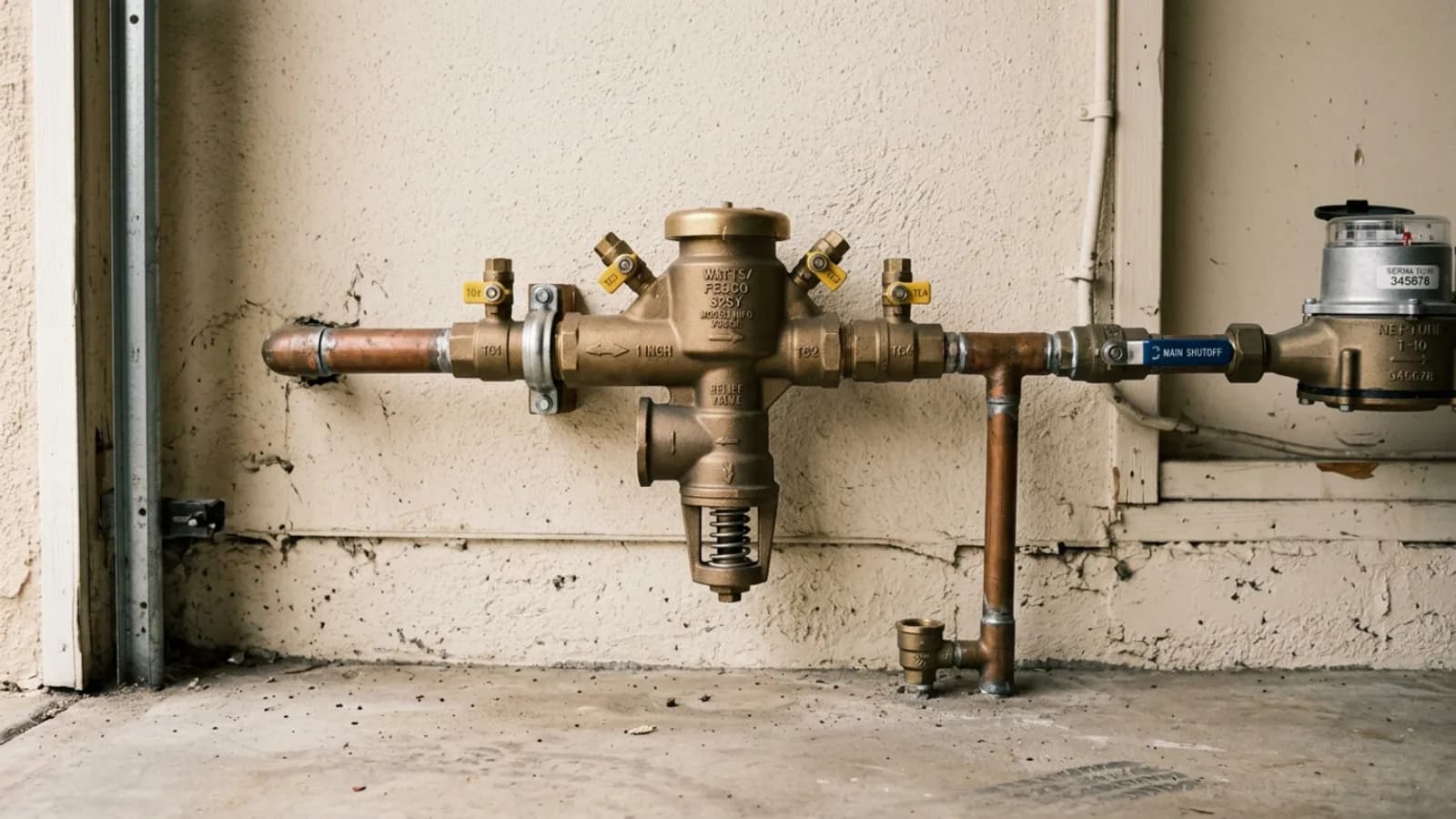
Clean drinking water is something most homeowners take for granted — until a pressure drop, a broken main, or an unprotected cross-connection creates conditions that allow contaminated water to flow backward into the supply. This phenomenon, called backflow, is a real risk in residential plumbing, and most Riverside County homeowners have at least one or two unprotected cross-connections without knowing it. Understanding backflow and the devices that prevent it is a meaningful step toward protecting household health. Backflow prevention services include device installation, annual testing, and certification paperwork — all of which Gardner Plumbing Co. handles throughout Riverside County.
How Backflow Happens
Backflow occurs two ways. Back-siphonage happens when a sudden pressure drop in the main supply creates a vacuum that draws water backward from fixtures into the potable supply. This can occur when a nearby fire hydrant is opened, a main breaks, or firefighting draws heavy volume from the system. If a garden hose is submerged in a pesticide bucket when this pressure drop occurs, contaminated water can be drawn back into the home's water supply. Back-pressure occurs when pressure inside the home's plumbing exceeds municipal supply pressure — for example, when a booster pump or closed plumbing system raises pressure above the incoming line. Both mechanisms pose genuine health risk, which is why the EPA's drinking water protection resources treat backflow prevention as a critical component of potable water safety.
Common Cross-Connections in Residential Homes
A cross-connection is any point where the clean water supply connects to a potential contamination source. Common residential examples include irrigation systems and sprinkler lines, outdoor hose bibs used with hose-end sprayers or pesticide mixers, pool or spa autofill lines, utility sinks with hoses, and boiler or radiant heating lines. Each of these points needs the right backflow device matched to its hazard level. The good news: protecting most of them is straightforward and inexpensive. A hose bib vacuum breaker threads onto an outdoor spigot in minutes and is one of the most effective low-cost upgrades any homeowner can make. Understanding your home's full plumbing system helps identify where cross-connections may exist.
Types of Backflow Prevention Devices
Devices vary by design and hazard level. Hose bib vacuum breakers (HBVB) thread onto outdoor spigots and prevent back-siphonage through a connected hose. Atmospheric vacuum breakers (AVB) are used on individual irrigation zones but must not be under constant pressure. Pressure vacuum breakers (PVB) and spill-resistant vacuum breakers (SVB) handle continuous-pressure irrigation systems and are installed at least 12 inches above the highest sprinkler head they serve. Double check valve assemblies (DCVA) provide protection for lower-hazard irrigation and fire sprinkler systems. Reduced pressure zone (RP) assemblies are required for higher-hazard conditions — fertilizer injection systems, for example — and include a relief valve that discharges if a problem occurs. Proper device selection, installation height, orientation, and access clearance all matter for long-term performance and code compliance. California Water Code and local water purveyor rules govern which devices are required and when annual testing is mandated — a licensed contractor handles both the installation and the required paperwork filing.
Backflow Testing Requirements in Riverside County
California Water Code Section 116815 requires water suppliers to maintain cross-connection control programs, and most water agencies in Riverside County implement these requirements through their own programs with teeth. What this means practically for homeowners and property owners:
- Irrigation systems with RP assemblies: Annual certified testing required by most agencies. The water purveyor (Rancho California Water District, Eastern MWD, City of Lake Elsinore, etc.) sends testing notices — these are not optional.
- Pool and spa autofill assemblies: Often require a reduced pressure zone device or equivalent; testing frequency varies by agency and hazard classification.
- Commercial properties with chemical injection: More rigorous testing schedules and higher-rated devices are mandatory. Failure to test results in water service suspension in most Riverside County districts.
- Residential irrigation PVBs: Many agencies require these as well. Homeowners who bought a home with an existing irrigation system may not know what device is installed or whether it has been tested recently.
If you have received a testing notice from your water agency and have not had it addressed, do not ignore it. The notice reflects a legal compliance requirement. Gardner Plumbing Co. schedules, performs, and files certified backflow test reports with the applicable water purveyor throughout Riverside County.
Maintenance and Annual Testing
Backflow devices contain internal seals, springs, and check components that wear out over time. Many cities in Riverside County require annual testing of RP and double-check assemblies, and some require PVB testing as well. A certified tester connects calibrated gauges to the device's test ports, measures the performance of each check and relief valve, and submits results to the water agency. If a device fails, options include on-site repair with replacement parts or full replacement. Gardner Plumbing Co. performs certified testing, provides written test reports, and submits required documentation to the water purveyor. Homeowners can protect themselves between service visits by installing hose bib vacuum breakers on all outdoor spigots, maintaining air gaps on dishwasher drains, and keeping irrigation assemblies accessible and free of vegetation. For water quality beyond backflow protection, see our companion post on whole-house water filtration. CSLB #1073177.
Need backflow device installation or annual testing? Call (951) 246-4337 — no trip fees, no obligation. Gardner Plumbing Co. serves Temecula, Murrieta, Menifee, Lake Elsinore, Hemet, and 20+ additional cities across Riverside County.