Homeowner Tips
Does Homeowners Insurance Cover Plumbing Damage?
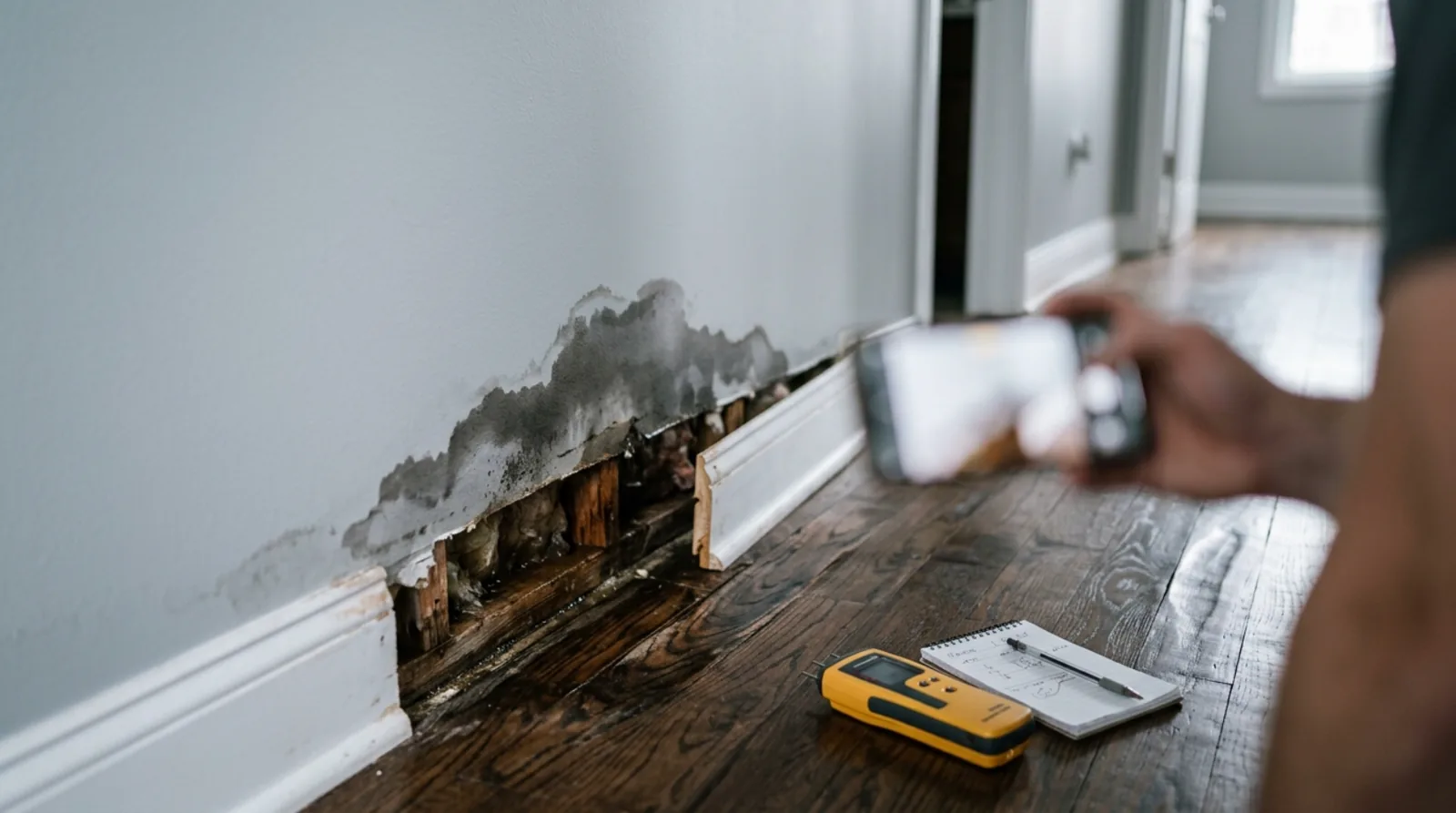
A pipe fails, water spreads across the floor, and the first call most homeowners want to make is to their insurance company. The second question — usually asked while standing in it — is whether any of this is covered. For most California homeowners policies the answer is a qualified yes, and the qualification is where people get surprised: standard coverage generally pays to repair the damage the water caused, and generally does not pay to repair the pipe that failed. Understanding that distinction before a claim, not during one, changes what you document, what you fix preventively, and how the conversation with an adjuster goes.
This is general information about how residential policies commonly work, not legal or insurance advice. Coverage is determined by your specific policy language and your carrier.
The Core Distinction: Sudden and Accidental vs. Gradual
Nearly every residential policy turns on whether the loss was sudden and accidental. A supply line that bursts without warning at 2 AM and soaks the hallway is the textbook covered event — the resulting damage to drywall, flooring, baseboards, cabinetry, and contents typically falls within coverage.
A pinhole leak that has been wetting a wall cavity for eight months, producing mold and rotted framing, is typically treated as a gradual loss and excluded. Insurers reason that the damage accumulated over a period during which the homeowner could reasonably have noticed and acted. The California Department of Insurance publishes Residential Insurance: Homeowners and Renters, a consumer guide that outlines how these coverage categories are structured for California policyholders.
This is the single strongest financial argument for leak detection. A leak caught in week one is a covered sudden loss and a small repair. The same leak in month eight is an uncovered gradual loss and a five-figure remediation. Our guide to signs of a hidden water leak exists for exactly this reason.
What Is Typically Covered
- A burst supply line and the water damage that follows
- A water heater tank that ruptures suddenly and floods a garage or closet
- A failed washing machine or dishwasher supply hose
- Damage from an accidental overflow, such as an unattended tub or a failed toilet fill valve
- Tear-out costs — opening a wall, ceiling, or slab to reach the failed pipe
- Additional living expenses if the home becomes uninhabitable during repairs
That fifth item matters more than most homeowners realize. Many policies cover the cost of accessing the pipe — jackhammering a slab, opening drywall — even when they will not cover the pipe repair itself. On a slab leak, access is often the larger number.
What Is Commonly Excluded
- The failed pipe, fitting, or appliance itself
- Long-term seepage, gradual leaks, and the mold that results from them
- Damage attributed to deferred maintenance or a known unrepaired condition
- Sewer and drain backup — usually excluded unless an endorsement was purchased
- Groundwater intrusion and surface flooding — a separate flood policy matter
- Damage occurring while a home sat vacant beyond the policy's stated vacancy period
Sewer backup is the exclusion that catches the most people. A main line blockage that pushes wastewater into a ground-floor shower is a sizable and unpleasant loss, and on many standard policies it is not covered without an endorsement. That endorsement is typically inexpensive relative to the exposure — and learning to read sewer line warning signs is the cheaper half of the strategy.
Why Pipe Age and Material Matter to Your Carrier
Insurers in California increasingly underwrite based on plumbing material and age. Homes with original galvanized steel supply lines, or with a documented history of repeated pinhole leaks, can face higher premiums, restricted water damage coverage, non-renewal, or a requirement to repipe as a condition of coverage.
That is a real and often overlooked argument for repiping a house that keeps producing leaks: past a certain point, the next leak is not just a repair bill, it is an insurability problem. Homeowners weighing that decision should read the signs a home needs repiping and keep the repipe invoice and permit — carriers frequently ask for proof of the upgrade and may adjust the rate accordingly.
What to Document in the First Hour
Claim outcomes turn heavily on documentation created before cleanup began. In the first hour, after shutting off the water:
- Photograph and video every affected room before moving anything
- Photograph the failed component itself — the split pipe, the corroded fitting, the ruptured tank
- Note the date and time you discovered the leak and the time water was shut off
- Keep the failed part; do not let it leave with the debris
- Save every receipt, including fans, towels, and a hotel night if one is needed
- Get the plumber's written diagnosis stating the failure mode and that it was sudden
That last item carries disproportionate weight. A licensed plumber's written finding that a fitting failed suddenly is materially different from an adjuster's assumption that a stain means months of seepage. Knowing where your shutoff is before any of this happens is covered in how to find and use your main water shutoff valve.
Prevention Your Carrier May Actually Reward
Some carriers offer premium credits for automatic water shutoff devices, because a device that closes the main within seconds of detecting abnormal flow converts a catastrophic claim into a minor one. A Moen Flo smart water shutoff monitors flow and pressure continuously and shuts the water off automatically — worth asking your agent about before you install, since documentation requirements vary by carrier.
Beyond devices, the unglamorous items carry weight: replacing rubber washing machine hoses with braided stainless, exercising shutoff valves annually, maintaining the water heater, and keeping pressure regulated below 80 PSI. An annual 65-point plumbing inspection creates a dated paper trail showing the system was maintained — which is precisely the record that answers a deferred-maintenance denial.
The Practical Summary
Insurance is built to absorb the sudden and unforeseeable. It is not built to fund a plumbing system that has reached the end of its service life. The homeowners who fare best after a water loss are the ones who found the failure early, shut the water off fast, documented before they cleaned, and could show the system had been maintained. Everything after that is negotiation.
Gardner Plumbing Co. provides written diagnostic documentation on every emergency call, including the failure mode and photographs — the record homeowners need when a claim follows. CSLB #1073177, 30+ years in Riverside County, 900+ five-star Google reviews. For the steps to take in the first ten minutes of a failure, see our emergency plumbing preparedness guide.
Active leak or water damage right now? Call (951) 246-4337 — 24/7 emergency response with written documentation for your claim. Gardner Plumbing Co. serves Temecula, Murrieta, Menifee, Corona, Riverside, Hemet, and 20+ cities across Riverside County and neighboring communities.