Drain Care
The Truth About Flushable Wipes and What They Do to Your Plumbing
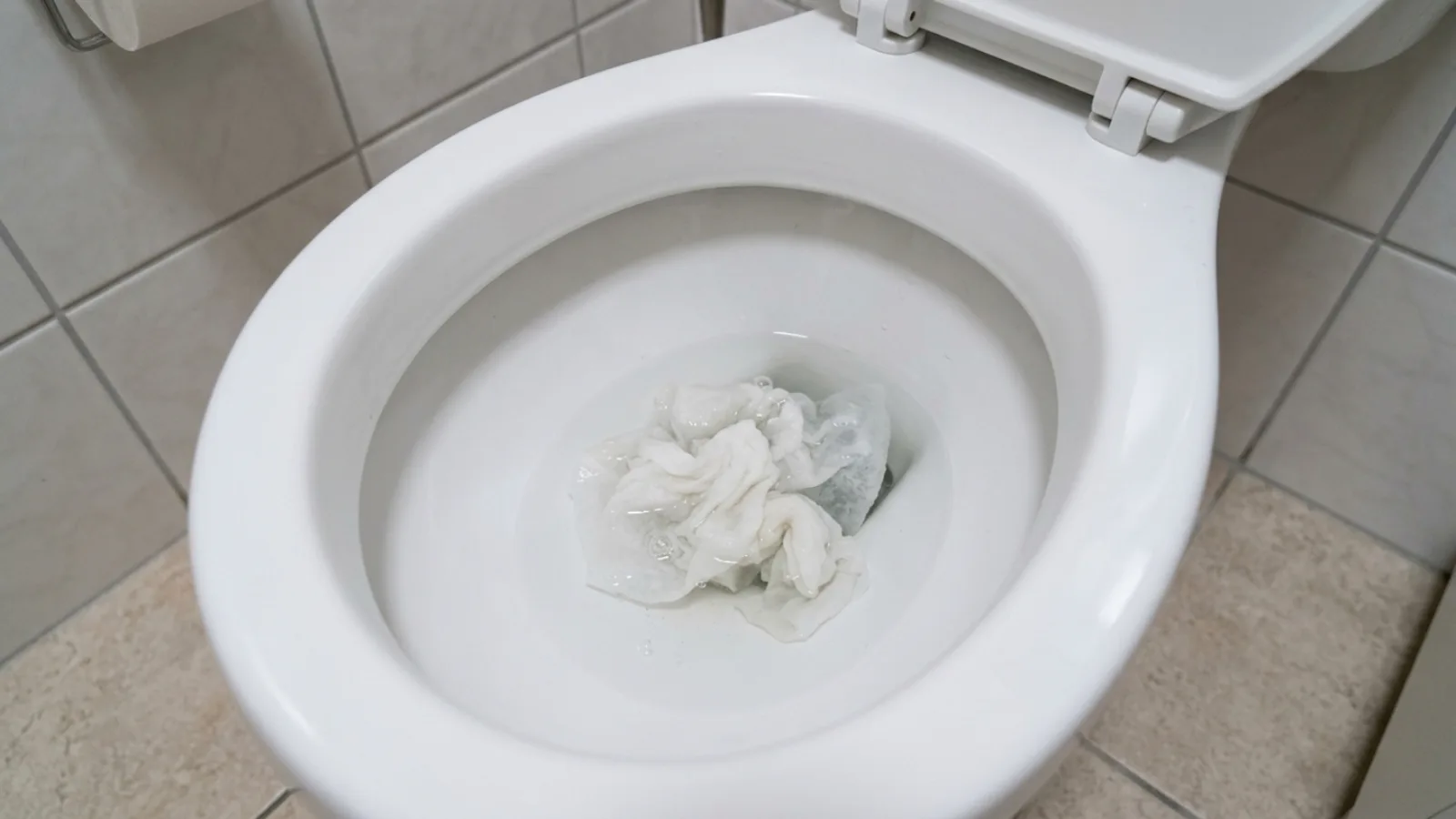
The word "flushable" on a wipe package describes what happens in the toilet bowl — the wipe clears the trap and enters the drain line. What it does not describe is what happens in the 50 to 100 feet of pipe between the toilet and the city main, or what happens inside a septic tank. For homeowners in Temecula, Murrieta, Menifee, Lake Elsinore, Hemet, and Riverside County and neighboring communities, flushable wipes have become one of the leading contributors to severe sewer blockages, backup events, and emergency plumbing calls. Understanding why helps homeowners make a straightforward habit change that protects both their plumbing and their wallets.
Why Wipes Do Not Break Down Like Toilet Paper
Standard toilet paper is manufactured to disintegrate rapidly when wet. Its fibers are short and loosely bonded — designed specifically to break apart in drain lines before reaching the sewer main. Wipes, even those labeled "flushable" or "septic safe," are manufactured from synthetic non-woven fabrics, plastic-derived fibers, or thick plant cellulose materials engineered to stay intact during use. That structural integrity — the feature that makes them feel durable and effective in the moment — is exactly what makes them dangerous in a plumbing system. A simple demonstration illustrates the difference: place a sheet of toilet paper in a jar of water and shake it gently. It breaks apart within seconds. Place a "flushable" wipe in another jar and repeat. After several minutes of agitation, the wipe remains largely intact. Inside a drain pipe, the physics are the same — just slower.
What Happens Inside Your Drain Line
After a wipe clears the toilet trap, it travels through the drain stack and enters the main sewer lateral — the pipe that runs from the house to the city connection or septic tank. Riverside County's housing stock includes a mix of PVC, ABS, clay, and cast iron sewer laterals, with older clay and cast iron lines having interior roughness, misaligned joints, and partial root intrusions that provide catch points for passing debris. A single wipe may pass through cleanly. But wipes that snag on rough pipe walls or root fibers begin to accumulate. They catch hair, grease, and food particles, and the mass grows. Eventually it forms a blockage dense enough to back up wastewater into the home through the lowest drain — a bathtub, a floor drain, or a ground-floor toilet. Clearing a wipe blockage from a main sewer line typically requires hydro-jetting at 2,500–4,000 PSI to cut through the synthetic mass — a far more involved and expensive service call than clearing a standard grease clog. For more on how blockages develop and what professional cleaning involves, see our post on hydro-jetting stubborn clogs.
Fatbergs, Municipal Systems, and the Bigger Picture
Wipes that pass through individual home plumbing and reach the city sewer combine with fats, oils, and grease (FOG) from household drains to form massive concrete-like blockages called fatbergs. Municipal utility teams across Southern California spend significant resources clearing these formations from city mains and repairing damage to pump stations at wastewater treatment facilities. Those costs are ultimately borne by ratepayers. Septic system owners face a more direct impact: wipes that reach a septic tank sink to the bottom and contribute to the solid layer, can clog the outlet baffle or effluent filter, and force solids toward the drain field — an extremely costly repair that a simple habit change can prevent entirely. The EPA's septic system guidance is explicit: only human waste and toilet paper belong in a septic-connected toilet.
Early Warning Signs of a Wipe-Related Blockage
Riverside County homeowners should watch for these indicators that a wipe accumulation may be developing in the main sewer lateral:
- Toilets that require two flushes or seem to drain weakly
- Gurgling sounds from tub or shower drains after flushing the toilet
- Multiple fixtures draining slowly at the same time
- Sewage odors near floor drains or the exterior cleanout
- Water appearing around a toilet base or floor drain during laundry or dishwasher cycles
Any of these signs warrants a professional main line assessment — a sewer camera inspection shows exactly what is in the line and where. Catching a partial blockage before it becomes a complete backup is significantly less expensive than clearing and cleaning up after a sewage overflow event. Our post on how to prevent clogged drains covers the broader habits that keep main lines clear.
Simple Alternatives and Preventive Maintenance
The solution is straightforward: place a lidded trash receptacle next to every toilet and use it for wipes, cotton swabs, dental floss, feminine hygiene products, and any other material that is not toilet paper or human waste. For households that prefer a wipe-like experience, a bidet seat or handheld bidet sprayer eliminates the need for wipes entirely and reduces toilet paper use significantly. For existing blockage concerns, professional drain cleaning with a sewer camera inspection and targeted hydro-jetting clears the line and documents its current condition. Periodic maintenance — a camera inspection every few years in homes near mature trees, or in older clay-pipe neighborhoods — prevents surprises. Gardner Plumbing Co. provides upfront flat-rate pricing for all drain and sewer services, uses shoe covers and drop cloths during all home visits, and documents every camera inspection with video so homeowners see exactly what the technician found. CSLB #1073177.
Slow drains or gurgling fixtures? Call (951) 246-4337 — no trip fees, no obligation. Gardner Plumbing Co. provides sewer camera inspections and hydro-jetting across Temecula, Murrieta, Menifee, Lake Elsinore, Hemet, and 20+ Riverside County cities.