Drain Care
Grease Down the Drain: Why Kitchen Lines Clog Most
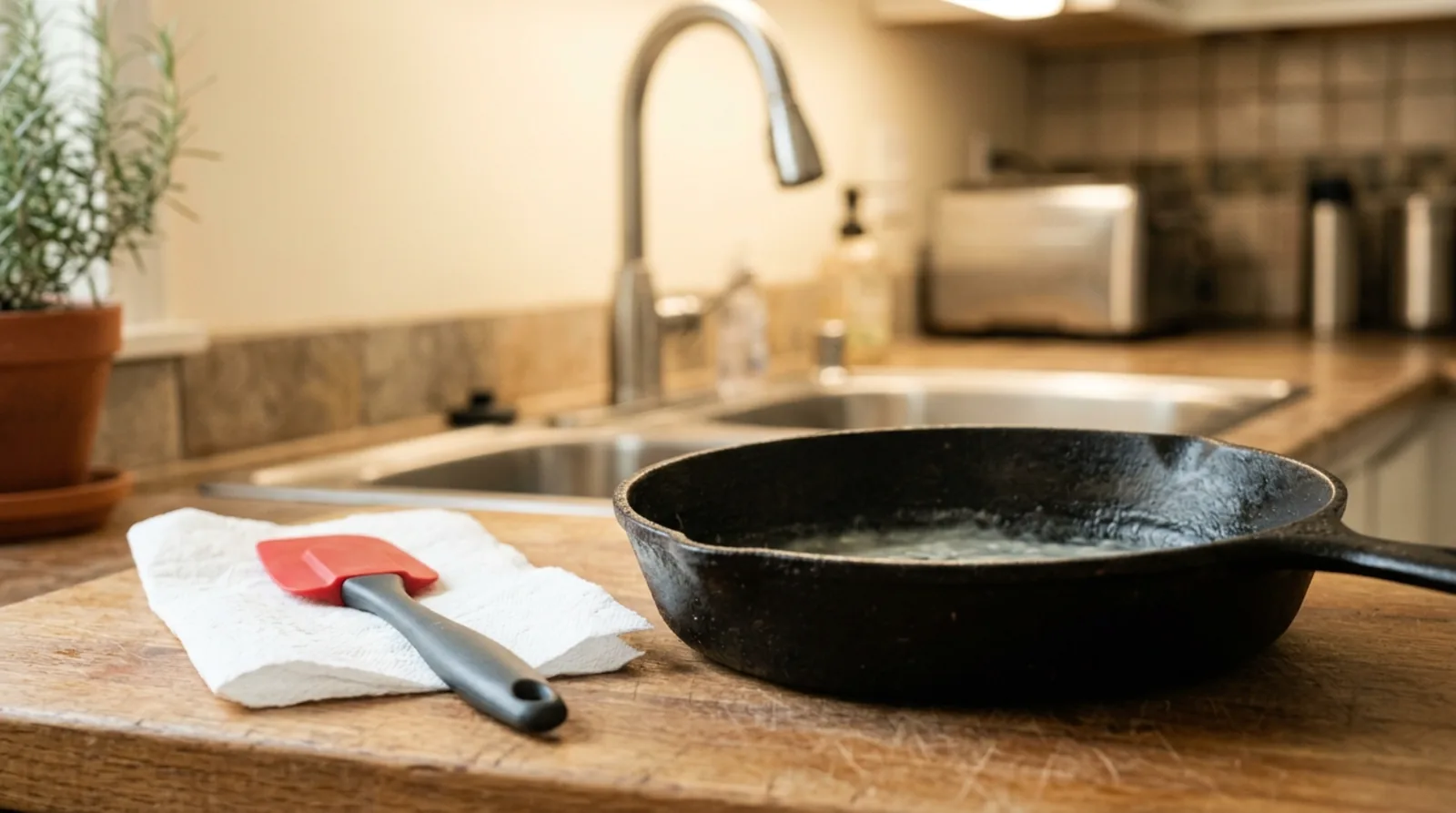
Ask any plumber which drain in a house clogs most and the answer is immediate: the kitchen. Not the shower with its hair, not the toilet, not the laundry. The kitchen sink, by a wide margin. The reason is fats, oils, and grease — FOG in the industry's shorthand — and the mechanism is more stubborn than most homeowners realize, because the substance that causes the blockage goes down the drain as a liquid and only becomes a problem after it is well out of sight.
The Physics of Why Hot Water Does Not Help
Bacon grease poured into a sink while hot is liquid. Run hot tap water behind it and it stays liquid a little longer. Add dish soap and it emulsifies temporarily, looking for all the world like it has washed away.
It has not. Ten to thirty feet down the line — past the trap, past the branch connection, out where the pipe is surrounded by cool soil or cool slab — the water temperature drops, the emulsion breaks, and the grease returns to a semi-solid state. It congeals on the pipe wall, where it stays. The next pour adds to it. Over months and years, the interior diameter narrows until the day something ordinary, like coffee grounds or a rice portion, cannot get past.
Grease also does not stay chemically neutral. In the presence of calcium and magnesium in hard water — plentiful in Riverside County — free fatty acids form calcium-based soap deposits that adhere far more aggressively than grease alone. The result is a hard, waxy layer that resists both hot water and cable clearing.
This Is Not a Small Problem
Grease is one of the most common causes of sewer blockages, not just in homes but in municipal collection systems. The U.S. EPA's guidance on sanitary sewer overflows names fats, oils, and grease — along with wipes and similar products marketed as flushable — as materials that create blockages in collection systems. That is why cities across the Inland Empire run FOG education programs and why restaurants are required to maintain grease interceptors.
What happens in a municipal main happens in a home's 2-inch kitchen branch on a much faster timeline, because the pipe is smaller and the cooling is more abrupt.
What Counts as Grease (More Than You Think)
Homeowners who would never pour bacon fat down a drain often send the same material down in less obvious forms:
- Cooking oil, butter, margarine, shortening, and lard
- Meat trimmings and fat rinsed off a cutting board
- Salad dressing, mayonnaise, and creamy sauces
- Dairy — heavy cream, melted cheese, yogurt, ice cream
- Gravy and pan drippings
- Peanut butter and nut butters
- Frosting and batter residue
- The greasy film rinsed off every plate, every day
That last one is the honest one. Most kitchen line buildup is not a single careless pour — it is the cumulative residue of ordinary dishwashing over years. Which is why the goal is reducing the load, not achieving perfection.
The Garbage Disposal Makes It Worse, Not Better
A disposal grinds solids into small particles. It does nothing to grease — and the ground particles it creates give congealing grease something to bind to, forming a composite deposit that is tougher than either component alone. Coffee grounds, eggshells, pasta, rice, and fibrous vegetable scraps are the usual binders.
Disposals are useful appliances used correctly. Our guide to garbage disposal care covers what belongs in one and what does not, and disposal repair and replacement is a routine service call when one fails.
What Actually Prevents Kitchen Clogs
Can it, cool it, trash it. Keep a lidded container near the stove. Pour cooled grease into it, and when it fills, put it in the trash. This one habit prevents more kitchen backups than everything else combined.
Wipe before you rinse. A paper towel or rubber spatula across greasy pans and plates before they hit the sink removes the majority of the fat load. It is a five-second step with an outsized effect.
Use a sink strainer. A basket strainer catches food solids so they never reach the line to bind with grease. Empty it into the trash, not back down the drain.
Run cold water with the disposal, not hot. Cold water keeps any fats present solid so they are ground and flushed through as particles rather than melted and redeposited on the pipe wall downstream.
Skip the caustic drain products. Sodium hydroxide reacts with grease and generates heat, which softens the blockage superficially and then lets it re-harden, often more densely. Meanwhile the chemical attacks older drain assemblies — see why chemical drain cleaners destroy pipes.
Enzyme treatments, used as maintenance. Bacterial and enzymatic products digest organic buildup slowly and do not damage pipe. They will not open a blocked line, but applied monthly overnight they meaningfully slow accumulation in a kitchen branch. Broader habits are covered in how to prevent clogged drains.
When Buildup Has Already Happened
Once a kitchen line is coated, prevention alone will not recover the lost diameter. Cable clearing bores a hole through the deposit and restores flow — which is why the same kitchen line clogs again six months later. The grease layer is still there; only the channel was reopened.
Hydro-jetting uses high-pressure water through a specialized nozzle to strip the pipe wall back toward full diameter. For a kitchen line with years of accumulation it is the difference between a temporary fix and an actual reset — explained fully in our post on hydro-jetting for stubborn clogs. If clogs recur even after jetting, a camera inspection should look for a belly or an offset joint holding material in place; the diagnostic logic is in reading which drains are affected.
Gardner Plumbing Co. provides kitchen drain cleaning and hydro-jetting across Riverside County with written pricing before work begins and a 30-Day Callback Guarantee. CSLB #1073177, 30+ years local, 900+ five-star Google reviews.
Kitchen sink backing up again? Call (951) 246-4337 — same-day service available in most areas. Gardner Plumbing Co. serves Corona, Riverside, Hemet, and 20+ additional cities across Riverside County and neighboring communities.