Drain Care
One Slow Drain or Every Drain? What It Tells You
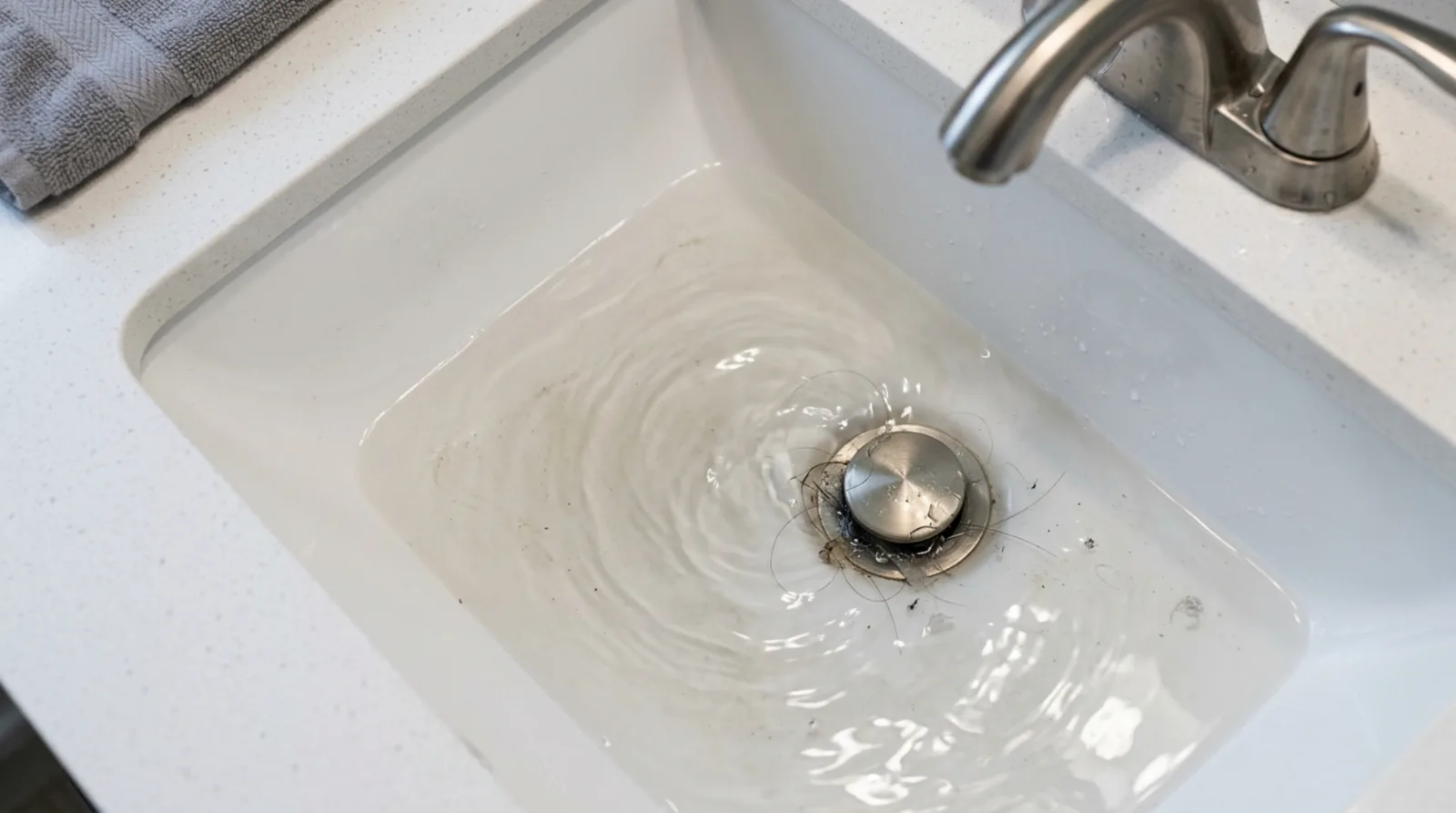
Before you reach for a plunger, ask one diagnostic question: is this one drain, or is it more than one? The answer separates a fifteen-minute fix from a main sewer line problem that gets worse every hour it goes unaddressed. Drainage systems in Riverside County homes are built as a branching tree — fixtures feed branch lines, branch lines feed the main building drain, and the main drain feeds the sewer lateral out to the street. A blockage anywhere in that tree affects everything upstream of it and nothing downstream. Reading which fixtures are affected tells you roughly where the blockage sits before anyone opens a wall or pulls a cleanout cap.
Pattern One: A Single Fixture Drains Slowly
One bathroom sink is sluggish. Everything else in the house runs normally. This is almost always a local blockage within a few feet of the fixture — hair and soap scum on the pop-up assembly, a biofilm ring in the tailpiece, or debris settled in the P-trap.
This is genuinely homeowner territory. Remove and clean the pop-up stopper, then clear the P-trap with a bucket underneath. A cup plunger with the overflow opening sealed will move most of what remains. What you should not do is pour a caustic drain product down it — our post on why chemical drain cleaners destroy pipes covers what those products do to older drain assemblies and to the technician who opens the line afterward.
Pattern Two: Every Fixture in One Room Is Slow
The sink, tub, and toilet in one bathroom all drain poorly, but the kitchen and the other bathroom are fine. That points to the branch line serving that room — typically a 2-inch line for sinks and tubs joining a 3-inch line at the toilet.
Branch-line blockages are usually accumulated soap, hair, and grease narrowing the pipe over years rather than a single object. A drum auger run from a cleanout reaches most of them. If the same branch clogs repeatedly on a six-month cycle, the pipe interior has scaled or the line has settled into a belly that holds standing water — mechanical clearing treats the symptom while the cause stays put. That is when a camera inspection earns its cost.
Pattern Three: The Lowest Fixtures Back Up First
This is the pattern that should get your attention. Flush an upstairs toilet and water appears in the downstairs shower. Run the washing machine and the nearest floor drain or tub fills. Use the kitchen sink and the toilet gurgles.
Cross-fixture symptoms mean the blockage is downstream of where those fixtures join — in the main building drain or the sewer lateral. Water backs up to the lowest available opening because that is the first place it can escape, which is why ground-floor showers and floor drains flood while upstairs fixtures seem fine. The U.S. EPA's guidance on sanitary sewer overflows describes how blockages, root intrusion, and grease accumulation produce exactly this behavior in collection systems of any size.
Main line blockages do not clear with a plunger and do not respond to chemical products. Stop using water in the home and get the line opened. Our guide on warning signs of a sewer line problem covers the escalation path.
Pattern Four: Gurgling With No Slowdown
Drains that gurgle, bubble, or glug but still empty at normal speed are usually telling you about venting, not blockage. Every drain needs air behind the water to move freely. When a vent stack is partially blocked — a bird nest, leaf debris, or a rodent — the draining water pulls air through the nearest trap instead, producing the gurgle and sometimes siphoning that trap dry. A dry trap then lets sewer gas into the room. Our guide to preventing clogged drains covers the habits that keep both problems from developing.
What the Timing Adds to the Diagnosis
Pattern tells you where. Timing tells you what:
- Sudden and total — a foreign object, a wipe mass, or a collapsed section
- Gradually worse over months — grease, scale, or soap buildup narrowing the interior
- Seasonal, worse in cooler months — root intrusion, as roots seek moisture and warmth at pipe joints
- Worse after heavy rain — groundwater infiltration through cracked pipe or a compromised lateral
- Recurring at the same interval — an unresolved structural issue: a belly, an offset joint, or partial collapse
A clog that returns every few months in the same place is not a cleaning problem. Roots in particular are relentless — see how tree roots damage plumbing for what that looks like in Inland Empire yards with mature landscaping.
What to Do Right Now, by Pattern
One fixture: clean the stopper and trap, plunge, and monitor. No emergency.
One room: try a hand auger through the cleanout if one is accessible. If the clog returns within weeks, schedule a professional drain cleaning rather than repeating the cycle.
Multiple rooms, or the lowest fixture backing up: stop running water immediately — no dishwasher, no laundry, no showers. Locate your main sewer cleanout and call a licensed plumber. Every gallon added while the main is blocked has to go somewhere.
Gurgling only: not urgent, but worth having the vent checked before it becomes a dry-trap odor problem.
When Clearing Is Not Enough
Cable clearing punches a hole through a blockage. It restores flow, and for a one-time object or a soft clog that is the correct and complete repair. For a line whose interior walls are coated with years of grease and scale, or a line being re-entered by roots, hydro-jetting scours the pipe back to full diameter instead of just reopening a channel — the difference is explained in our post on why hydro-jetting solves stubborn clogs. Gardner Plumbing Co. provides drain cleaning and sewer backup service throughout Riverside County under CSLB #1073177, with written pricing before work starts and a 30-Day Callback Guarantee on the work performed.
Multiple drains backing up? Stop running water and call (951) 246-4337 — 24/7 emergency service available. Gardner Plumbing Co. serves Murrieta, Temecula, Menifee, and 20+ additional cities across Riverside County and neighboring communities.