Drain Care
Sewer Smell in the House? What the Odor Is Telling You
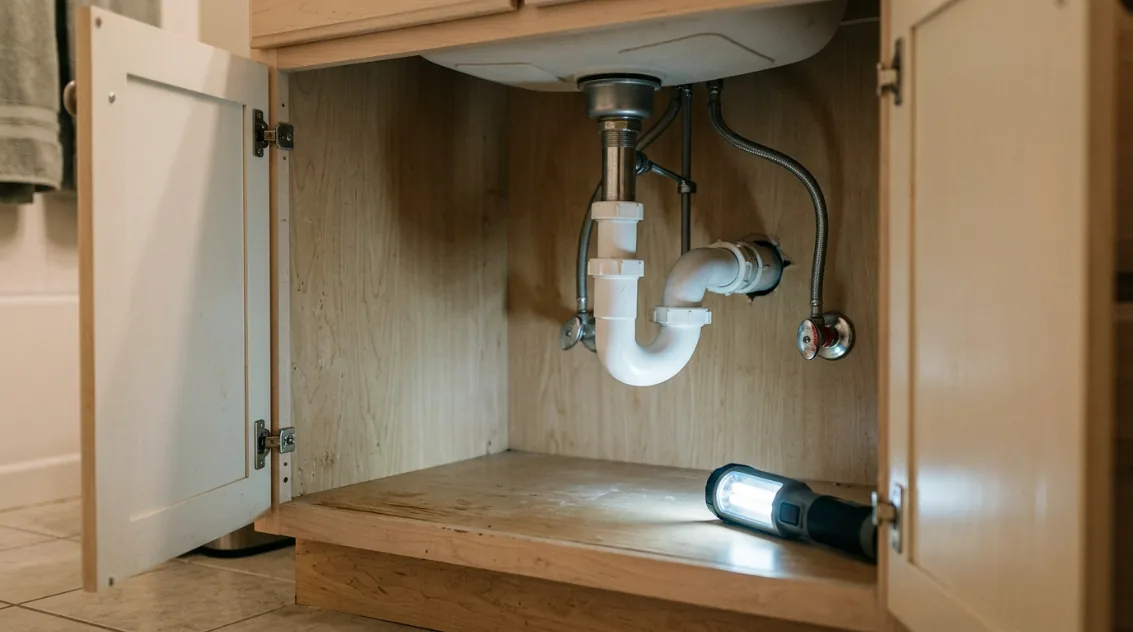
Drain systems are designed to be one-way. Waste and water go out; the gases produced downstream stay out there. The entire barrier separating your living space from that system is a few inches of water sitting in a P-trap under each fixture, plus a vent system that lets air move without disturbing those traps. When you smell sewer gas indoors, that barrier has been breached somewhere. The good news is that the most common cause takes about thirty seconds to fix. The less common ones are worth finding quickly, because sewer gas is unpleasant, flammable at concentration, and a marker for problems you would rather know about.
Cause One: A Dry P-Trap
By far the most common explanation. Every drain has a U-shaped bend holding standing water that blocks gas from rising. If a fixture goes unused for weeks, that water evaporates and the seal is gone.
The usual suspects: a guest bathroom nobody uses, a basement or garage floor drain, a laundry sink, a wet bar, or the shower in a vacation rental between stays. Inland Empire summers accelerate this considerably — low humidity and high temperatures evaporate a trap seal far faster than a coastal climate would.
The fix is to run water down every drain in the house for thirty seconds, including floor drains. For fixtures that stay unused, do it monthly, or pour a small amount of mineral oil into the trap after refilling — oil floats on the water and dramatically slows evaporation. This is one of the standing recommendations in our guide to plumbing maintenance for vacation and rental homes.
Cause Two: A Blocked or Damaged Vent
Vent pipes running up through the roof let air into the drain system so water can flow without creating suction. When a vent is blocked — a bird nest, leaves, a rodent, or a cracked vent line in the attic — draining water pulls air through the nearest trap instead, siphoning it dry within a few uses.
The signature of a vent problem is odor combined with gurgling. Fixtures glug when other fixtures drain, and traps in one part of the house go dry repeatedly no matter how often you refill them. Refilling treats the symptom; the vent is the cause. The full diagnostic pattern is covered in reading which drains are affected.
Cause Three: A Failed Toilet Wax Ring
The wax ring seals the toilet base to the closet flange. When it degrades — age, a toilet that rocks, or a flange that has settled below finished floor level — gas escapes around the base, and eventually water does too.
Tells: the odor is strongest at floor level near the toilet, the toilet rocks slightly when you shift weight, flooring around the base is discolored or soft, or there is a faint stain on the ceiling below an upstairs bathroom. Replacing a wax ring is routine work; replacing the subfloor after months of unnoticed seepage is not. Our post on common bathroom plumbing problems covers related fixture issues, and toilet repair and installation handles the fix.
Cause Four: Biofilm in the Drain
Not every bad drain smell is sewer gas. Organic material — soap, skin cells, toothpaste, food residue — builds a bacterial film on the inside of the drain line just below the fixture. That film produces sulfur compounds that smell remarkably like sewer gas but originate a few inches from the sink, not from the sewer.
The tell is location and timing: the odor is strongest right at one fixture, it is worse when water runs, and the rest of the house smells fine. Cleaning the tailpiece and overflow channel with a brush, followed by an enzyme treatment, resolves it. Caustic drain products are the wrong tool here for the reasons covered in why chemical drain cleaners destroy pipes.
Cause Five: A Cracked or Failing Drain Line
A drain, waste, or vent line that has cracked inside a wall, under a slab, or in a crawl space leaks gas continuously — and often water along with it. This is the cause that earns a same-day call.
Indicators: odor that persists after every trap has been refilled and every fixture checked, smell concentrated in one room or along one wall, a musty note alongside the sewer smell, or unexplained moisture. In slab homes, a broken drain line under the concrete can also show up as a persistently warm or damp spot on the floor. A camera inspection locates it — see what a sewer camera inspection shows.
Cause Six: A Main Line Problem
A partial blockage or a failing sewer lateral can push odor back up into the home, often with slow drains and gurgling as company. If the smell is accompanied by fixtures draining poorly, or is strongest near a floor drain or the lowest fixture in the house, treat it as a main line issue rather than a trap issue. Start with warning signs of a sewer line problem.
Cause Seven: An Improperly Installed Cleanout or Trap Primer
Interior cleanouts have threaded caps that can loosen or lose their seal. Floor drains in some homes are fed by a trap primer — a small line that automatically adds water to keep the trap full — and when a primer fails, that drain dries out on a schedule no amount of manual refilling keeps up with. Both are quick fixes once identified. Our guide to your main sewer cleanout explains what these access points do.
How to Narrow It Down in Fifteen Minutes
- Run water in every drain in the house, including floor drains and the laundry sink, for thirty seconds each
- Wait a day. If the odor is gone, it was dry traps — set a monthly reminder for unused fixtures
- If it persists, identify the room where it is strongest and whether it is at floor level or at a fixture
- Check whether the toilet rocks and whether flooring near its base is discolored
- Note any gurgling from other fixtures while one drains — that points at venting
- Note whether the smell worsens on windy days, which can indicate a roof vent issue
Sewer gas is a mixture including hydrogen sulfide, methane, and ammonia. At household concentrations it is primarily a nuisance and an indicator, but it is flammable at higher concentrations and should not be lived with indefinitely. The EPA's overview of indoor air quality covers how contaminants of this kind accumulate in residential spaces. If you smell rotten eggs and suspect a natural gas leak rather than a drain issue, leave the home and call the gas utility from outside — our gas line safety guide covers the distinction.
When to Call
Call a licensed plumber if the odor persists after all traps are refilled, if it is accompanied by slow drains or gurgling, if you can see moisture or staining, or if it is concentrated along one wall or in one room with no obvious fixture source. Gardner Plumbing Co. diagnoses drain and vent odor issues across Riverside County, including camera inspection of sewer lines and leak detection where a line failure is suspected. CSLB #1073177, 30+ years local, 900+ five-star Google reviews.
Persistent sewer smell you cannot track down? Call (951) 246-4337 — written estimate before work begins, no trip fee. Gardner Plumbing Co. serves Temecula, Murrieta, Menifee, Lake Elsinore, Corona, Riverside, and 20+ cities across Riverside County and neighboring communities.